
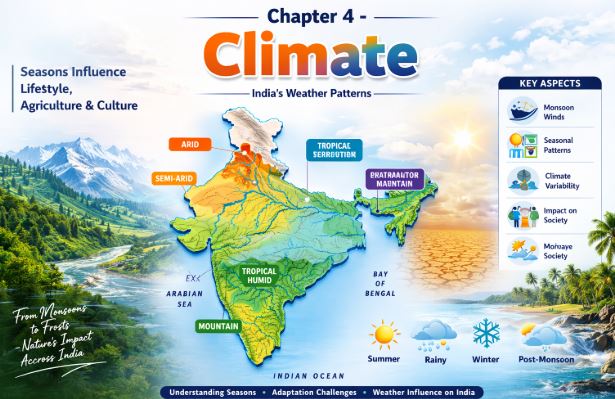
1. Introduction | Class 9 Social Science (Contemporary India) Chapter 4 Climate Notes
Hello students! Welcome to this exciting chapter where we will explore the atmospheric conditions of our beautiful country. Have you ever wondered why we wear sweaters in December or why it rains so heavily in July? The answer lies in understanding the climate of India.
It is important to know the difference between weather and climate. Weather refers to the state of the atmosphere over an area at any specific point of time, which can fluctuate even within a single day. On the other hand, climate is the sum total of weather conditions and variations over a large area for a very long period of time, usually more than thirty years. Both share the exact same elements: temperature, atmospheric pressure, wind, humidity, and precipitation. Let’s dive in!
2. Climatic Controls
What decides the climate of a place? There are six major controls of the climate of any place: latitude, altitude, pressure and wind system, distance from the sea, ocean currents, and relief features.
Due to the curvature of the earth, solar energy varies according to latitude, meaning it generally gets cooler as we move from the equator to the poles. Similarly, as you go higher up a mountain, the air becomes less dense and the temperature decreases.
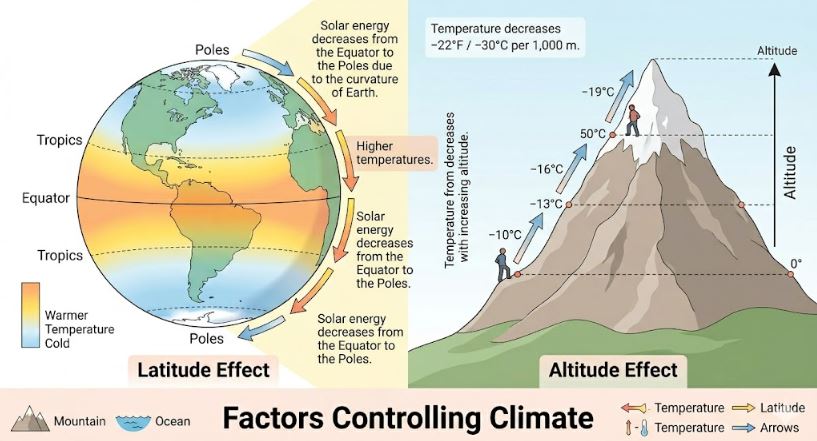
Figure-1: Various geographic features act as major climatic controls.
Places near the sea enjoy a moderating influence on their climate. As the distance from the sea increases, people experience extreme weather conditions, which is known as continentality (very hot summers and very cold winters). Lastly, high mountains act as massive barriers for cold or hot winds and can cause precipitation if they lie in the path of rain-bearing winds.
3. Factors Affecting India’s Climate
Now, let’s look at what shapes India’s unique climate. The Tropic of Cancer passes right through the middle of our country, meaning India experiences characteristics of both tropical and subtropical climates.
Up north, the mighty Himalayas stand tall with an average height of about 6,000 metres. They serve as our protectors, preventing the freezing cold winds of Central Asia from entering the subcontinent, giving us comparatively milder winters.
India also has unique pressure and wind conditions. In summer, a low-pressure area develops over interior Asia and northwestern India, causing air to move from the high-pressure southern Indian Ocean, cross the equator, and blow as the Southwest Monsoon winds. These winds blow over warm oceans, gather abundant moisture, and bring widespread rainfall over the mainland of India.
4. The Seasons in India
The monsoon type of climate is characterized by a distinct seasonal pattern. India primarily experiences four main seasons.
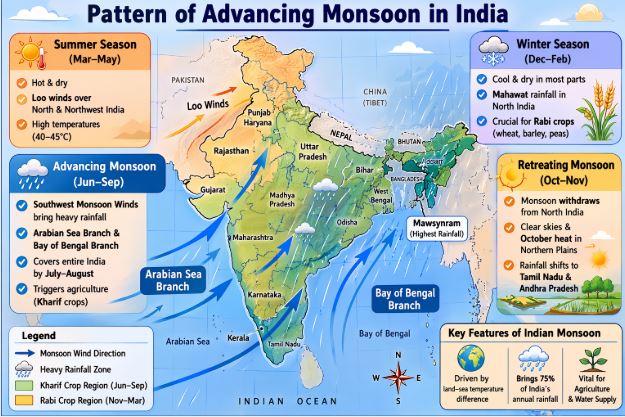
Figure-2: The pattern of the Advancing Monsoon across the Indian Subcontinent.
The Cold Weather Season (Winter) begins from mid-November and stays till February. Days are warm, nights are cold, and cyclonic disturbances from the west bring much-needed winter rainfall, locally known as ‘mahawat’, which is very important for ‘rabi’ crops.
The Hot Weather Season (Summer) lasts from March to May. A striking feature of this season is the ‘loo’, which are strong, gusty, hot, dry winds blowing over north and northwestern India.
During the Advancing Monsoon (Rainy Season) from June to September, the south-west monsoon winds bring heavy rainfall. Mawsynram receives the highest average rainfall in the world during this time. Finally, the Retreating Monsoon (Transition Season) occurs in October-November. As the monsoon withdraws, skies clear and temperatures rise, creating oppressive weather commonly known as ‘October heat’.
5. Distribution of Rainfall
Rainfall in India is highly variable and unevenly distributed. Some places get drenched, while others barely see a drop!
Parts of the western coast and northeastern India receive extremely heavy precipitation, recording over 400 cm of rainfall annually. On the other hand, it is less than 60 cm in western Rajasthan and adjoining parts of Gujarat, Haryana, and Punjab. Rainfall is equally low in the interior of the Deccan plateau.
Because of this high variability, areas that receive high rainfall are very liable to be affected by devastating floods, while regions with consistently low rainfall are highly drought-prone. These variations have given rise to a rich variety in the lives of people, influencing the food they eat, the clothes they wear, and the kind of houses they live in.
6. Monsoon as a Unifying Bond
Despite the perceptible regional variations in climatic conditions within our country, the unifying influence of the monsoon is quite incredible.
The Himalayas protect us from cold winds, providing a uniformly higher temperature, and the sea exerts a moderating influence on the Peninsular plateau. Even with these variations, the seasonal alteration of the wind systems provides a beautifully rhythmic cycle of seasons.
)
Figure-3: The Indian landscape and agriculture revolve around the unifying monsoon.
The entire Indian landscape, its animal and plant life, its entire agricultural calendar, and the life of the people, including our colorful festivities, revolve entirely around this monsoon phenomenon. Year after year, people of India from north to south and east to west eagerly await the arrival of the monsoon. These winds bind the whole country by providing water to set our agricultural activities in motion, making the rivers that carry this water a single united valley unit.
7. Key Takeaways
- Climate refers to the sum total of weather conditions and variations over a large area for more than thirty years.
- The six major climatic controls are latitude, altitude, pressure and wind system, distance from the sea, ocean currents, and relief features.
- The Himalayas prevent the freezing cold winds of Central Asia from entering the subcontinent, keeping winters milder.
- The strong, gusty, hot, dry winds blowing over north India during summer are called ‘loo’.
- Mawsynram in the Khasi Hills receives the highest average rainfall in the world.
- The oppressive daytime weather in October, caused by high temperature and humidity, is called ‘October heat’.
- The seasonal rhythmic cycle of the monsoon acts as a unifying bond for the entire Indian subcontinent.
8. Practice Section: Master the Chapter!
Test your knowledge with these carefully crafted questions based on the notes above.
Part A: True or False (10 Questions)
- Weather and climate mean exactly the same thing.
- The Tropic of Cancer passes through the middle of India.
- The Himalayas allow the extremely cold winds from Central Asia to easily enter India.
- The Coriolis force deflects winds towards the right in the northern hemisphere.
- The word ‘monsoon’ is derived from an Arabic word ‘mausim’.
- The ‘loo’ is a cold wind that blows during winter in northern India.
- Mawsynram receives the highest average rainfall in the world.
- ‘October heat’ is associated with the cold weather season.
- Western Rajasthan and Ladakh receive less than 10 cm of rainfall annually.
- The monsoon acts as a unifying bond for the Indian subcontinent.
Click to view True/False Answers
- False (Weather fluctuates often, climate is measured over more than thirty years)
- True
- False (They act as barriers preventing the cold winds from entering)
- True
- True
- False (It is a hot, dry wind blowing during summer)
- True
- False (It is associated with the retreating monsoon/transition season)
- True
- True
Part B: Multiple Choice Questions (10 Questions)
- Which of the following refers to the sum total of weather conditions over a large area for a long period?
A) Season
B) Weather
C) Climate
D) Atmosphere
- What is the term used for the state when coastal areas experience moderate climate while interior regions experience extreme weather?
A) Precipitation
B) Continentality
C) Coriolis force
D) Altitude
- Which force deflects winds towards the right in the northern hemisphere?
A) Gravitational force
B) Centrifugal force
C) Magnetic force
D) Coriolis force
- What are the strong, gusty, hot, dry winds blowing during the day over north and northwestern India in summer called?
A) Loo
B) Mahawat
C) Mango showers
D) Kaal Baisakhi
- Winter rainfall in northern India, which is crucial for ‘rabi’ crops, is locally known as:
A) Mango showers
B) Mahawat
C) October heat
D) Loo
- Which place receives the highest average rainfall in the world?
A) Mumbai
B) Chennai
C) Mawsynram
D) Thiruvananthapuram
- Pre-monsoon showers that help in the early ripening of mangoes in Kerala and Karnataka are known as:
A) Kaal Baisakhi
B) Mango showers
C) Monsoon breaks
D) Trade winds
- The oppressive weather during the day in October, caused by high temperature and humidity, is commonly known as:
A) Summer Solstice
B) Winter Solstice
C) Loo
D) October heat
- Which part of the country receives rainfall during October and November?
A) Tamil Nadu coast
B) Western Rajasthan
C) Ladakh
D) Punjab plains
- Which of these is NOT one of the six major climatic controls?
A) Latitude
B) Altitude
C) Longitude
D) Ocean currents
Click to view MCQ Answers
- C) Climate
- B) Continentality
- D) Coriolis force
- A) Loo
- B) Mahawat
- C) Mawsynram
- B) Mango showers
- D) October heat
- A) Tamil Nadu coast
- C) Longitude
Part C: Short Answer Questions (5 Questions)
- Define climate.
- What is the Coriolis force?
- What is ‘mahawat’ and why is it important?
- Which place in India receives the highest average rainfall?
- What do you understand by ‘October heat’?
Click to view Short Answers
- Climate refers to the sum total of weather conditions and variations over a large area for a long period of time (more than thirty years).
- It is an apparent force caused by the earth’s rotation that is responsible for deflecting winds towards the right in the northern hemisphere and towards the left in the southern hemisphere.
- ‘Mahawat’ is the local name for the total amount of winter rainfall in northern India. It is of immense importance for the cultivation of ‘rabi’ crops.
- Mawsynram, situated in the southern ranges of the Khasi Hills, receives the highest average rainfall in the world.
- During the retreat of the monsoon in October, owing to conditions of high temperature and humidity, the weather becomes rather oppressive during the day. This condition is commonly known as ‘October heat’.
Part D: Long Answer Questions (5 Questions)
- Explain the six major controls of climate.
- How do the Himalayas affect the climate of India?
- Describe the mechanism of the Advancing Monsoon season.
- Why is the monsoon considered a unifying bond for India?
- Explain the characteristics of the Hot Weather Season (Summer) in India.
Click to view Long Answers
- There are six major controls: latitude, altitude, pressure and wind system, distance from the sea, ocean currents, and relief features. Temperature decreases from the equator to the poles due to latitude, and it drops as altitude increases. The sea exerts a moderating influence, preventing extreme temperatures, while mountain reliefs can block winds or cause precipitation.
- The Himalayas in the north have an average height of about 6,000 metres. They act as a massive barrier, preventing the extremely cold winds from Central Asia from entering the Indian subcontinent. Because of this protection, the northern plains and the subcontinent experience comparatively milder winters and uniformly higher temperatures than other areas on the same latitudes.
- By early June, low-pressure conditions over the northern plains intensify and attract the south-east trade winds from the southern oceans. These cross the equator and enter the Indian peninsula as the south-west monsoon. Blowing over warm oceans at an average velocity of 30 km per hour, they gather abundant moisture and bring heavy and widespread rainfall across the Indian mainland.
- Despite regional variations in temperature and rainfall, the monsoon unifies the entire country. The rhythmic cycle of seasons dictates the agricultural calendar, plant and animal life, and cultural festivities. People across India eagerly await its arrival, and the rivers carrying the monsoon water unite the land into a single river valley unit, proving nature binds us together.
- The Hot Weather Season occurs from March to May due to the northward shift of the global heat belt. Temperatures can rise up to 45°C in the northwestern parts. A striking feature is the ‘loo’—strong, gusty, hot, dry winds blowing over north India. Dust storms are common in May, and towards the end of the season, pre-monsoon ‘mango showers’ occur in regions like Kerala and Karnataka.
Read Also: Class 9 Social Science (Contemporary India) All Chapters
For official syllabus and textbooks, visit the NCERT Official Website.