
1. Introduction | Class 9 Contemporary India Chapter 5 Natural Vegetation and Wildlife Notes
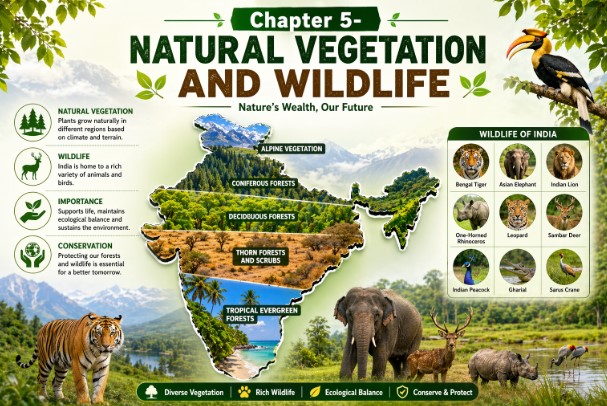
Hello students! Welcome to a fascinating chapter of your Class 9 Geography journey. Have you ever noticed the huge variety of trees, birds, and animals around you? India is a vast country, and this size brings an incredible diversity of life forms.
In fact, our country India is proudly known as one of the 12 mega bio-diversity countries of the world. With about 47,000 different plant species, India occupies the tenth place globally and fourth in Asia for plant diversity. We also have roughly 15,000 flowering plants, which account for 6 per cent of the world’s total flowering plants. To top it off, India has approximately 90,000 species of animals. Let’s dive in and explore this rich natural heritage!
2. What is Natural Vegetation?
Before we look at the different types of forests, we need to understand what “natural vegetation” actually means. Natural vegetation refers to a plant community which has grown naturally without human aid. Furthermore, it has been left undisturbed by humans for a long time.
This untouched plant life is also termed as virgin vegetation. Because of this strict definition, the cultivated crops, fruits, and orchards that we grow form part of vegetation, but they are not considered natural vegetation. When geographers want to denote plants of a particular region or period, they use the specific term “flora”. Similarly, the species of animals in an area are referred to as “fauna”.
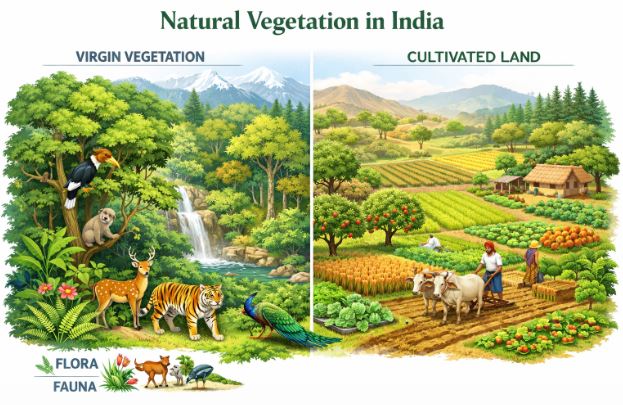
Figure-1: Exploring the immense diversity of natural vegetation across India’s landscapes.
3. Major Types of Vegetation
Due to different climates and soils, various major types of vegetation can be identified in our country. Let’s explore the first two primary forest types.
First, we have the Tropical Evergreen Forests. These lush forests are restricted to heavy rainfall areas of the Western Ghats, island groups like Lakshadweep and Andaman and Nicobar, upper parts of Assam, and the Tamil Nadu coast. They thrive best in areas having more than 200 cm of rainfall. The trees here are giants, reaching heights up to 60 metres or even above. Because there is no definite time for trees to shed their leaves, these forests appear green all year round. Important trees include ebony, mahogany, and rosewood.
Second are the Tropical Deciduous Forests, which are the most widespread forests of India. Also known as monsoon forests, they spread over regions receiving rainfall between 200 cm and 70 cm. Trees of this forest type shed their leaves for about six to eight weeks in the dry summer. Based on water availability, they are divided into moist and dry deciduous forests. Teak is the most dominant species here, alongside bamboo, sal, and shisham.
4. Thorn, Montane, and Mangrove Forests
Moving away from heavy rainfall zones, we encounter very different types of vegetation.
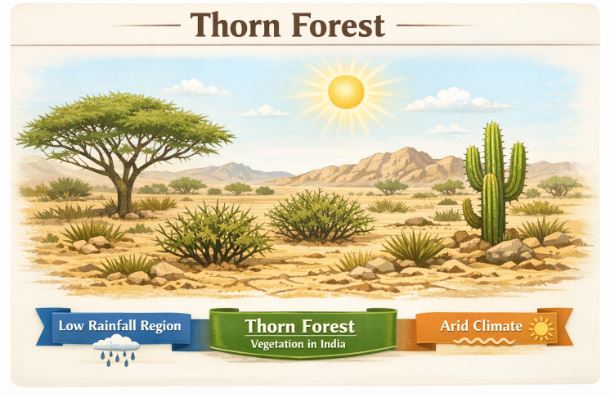
Figure-2: Different climatic zones give rise to unique forest covers like Montane and Mangroves.
The Thorn Forests and Scrubs: In regions with less than 70 cm of rainfall, natural vegetation consists of thorny trees and bushes. This is common in semi-arid areas of Gujarat, Rajasthan, and Madhya Pradesh. The trees are scattered and have long roots penetrating deep into the soil to get moisture. Their stems are succulent to conserve water.
Montane Forests: In mountainous areas, the decrease in temperature with increasing altitude causes natural vegetation to change. You will find wet temperate forests containing oaks and chestnuts between 1000 and 2000 metres. Higher up, coniferous trees like pine and deodar appear. At the highest altitudes, Alpine grasslands are common, which are used extensively for grazing by nomadic tribes like the Gujjars and Bakarwals.
Mangrove Forests: These tidal forests are found in coastal areas influenced by tides, where mud and silt get accumulated. The deltas of the Ganga, Mahanadi, and Godavari are covered by them. In the Ganga-Brahmaputra delta, the famous sundari trees are found, which provide durable hard timber[cite: 161].
5. India’s Majestic Wildlife
Just like its flora, India is exceptionally rich in its fauna. Our country boasts approximately 90,000 animal species and about 2,000 species of birds, which constitute 13% of the world’s total.
The elephants are the most majestic animals among the mammals. They are mostly found in the hot wet forests of Assam, Karnataka, and Kerala. The one-horned rhinoceroses are other unique animals, living in the swampy and marshy lands of Assam and West Bengal. For extreme dry conditions, the arid areas of the Rann of Kachchh and the Thar Desert serve as habitats for the wild ass and camels, respectively.
Did you know that India is the only country in the world that has both tigers and lions? The natural habitat of the Indian lion is the Gir forest in Gujarat. Meanwhile, tigers are found in the forests of Madhya Pradesh, the Sundarbans of West Bengal, and the Himalayan region. Furthermore, the Himalayas harbour a hardy range of animals that can survive extreme cold, such as the yak, snow-leopard, and the Tibetan antelope.
6. Conservation: Protecting Our Heritage
Every species has an essential role to play in the ecosystem, which makes conservation critical. Sadly, due to excessive exploitation of plant and animal resources by human beings, the ecosystem has been heavily disturbed.
Currently, about 1,300 plant species are endangered and 20 species are extinct. The main causes for this major threat to nature include hunting by greedy hunters for commercial purposes. In addition, pollution due to chemical and industrial waste, and the reckless cutting of forests to bring land under cultivation are heavily responsible for this imbalance.
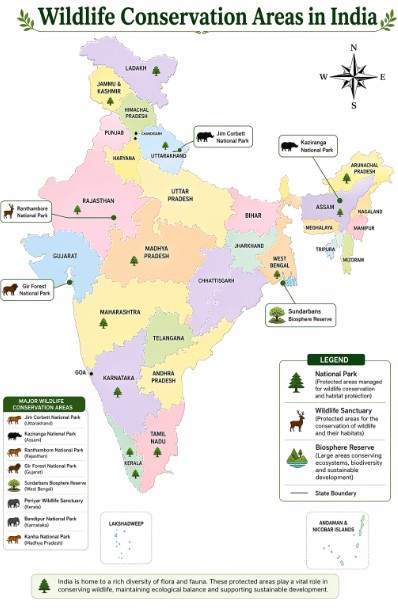
Figure-3: A map representation indicating the widespread conservation efforts across Indian states.
To protect the flora and fauna of the country, the government has taken several strong steps. Eighteen biosphere reserves have been set up in the country, out of which twelve have been included in the world network of biosphere reserves. Specific initiatives like Project Tiger and Project Rhino have been introduced. Finally, 106 National Parks and 573 Wildlife sanctuaries have been established to take care of our invaluable natural heritage[cite: 391].
7. Key Takeaways
- India is one of the 12 mega bio-diversity countries, possessing about 47,000 plant species.
- Natural or virgin vegetation grows without human aid and is undisturbed over time.
- Tropical Evergreen Forests thrive in areas with over 200 cm of rainfall and stay green year-round.
- Tropical Deciduous Forests are the most widespread in India and are also called monsoon forests.
- India has around 90,000 animal species and is the only country with both tigers and lions.
- Human exploitation has endangered about 1,300 plant species, heavily disturbing the ecosystem.
- The government has established 18 biosphere reserves, 106 National Parks, and 573 Wildlife sanctuaries for conservation.
8. Practice Section: Master the Chapter!
Test your knowledge with these carefully crafted questions based on the notes above.
Part A: True or False (10 Questions)
- India occupies the fourth place in the world in plant diversity.
- Cultivated crops and orchards are considered part of natural vegetation.
- Tropical Deciduous Forests are also known as monsoon forests.
- Trees in the Tropical Evergreen Forests reach heights up to 60 metres or above.
- Thorn forests are primarily found in areas receiving more than 200 cm of rainfall.
- The Sundari trees are a common variety found in Mangrove Forests.
- India has approximately 90,000 species of animals.
- Elephants are mostly found in the arid areas of the Thar Desert.
- India is the only country in the world that has both tigers and lions.
- The government has set up 100 biosphere reserves to protect flora and fauna.
Click to view True/False Answers
- False (India occupies tenth place in the world and fourth in Asia )
- False (They form part of vegetation but not natural vegetation )
- True
- True
- False (They are found in regions with less than 70 cm of rainfall [cite: 61])
- True [cite: 161]
- True
- False (They are found in the hot wet forests of Assam, Karnataka, and Kerala )
- True
- False (Eighteen biosphere reserves have been set up [cite: 386])
Part B: Multiple Choice Questions (10 Questions)
- How many plant species are roughly found in India?
A) 15,000
B) 47,000
C) 90,000
D) 2,000 - Which term is used to denote plants of a particular region or period?
A) Fauna
B) Biome
C) Flora
D) Ecosystem - Which of the following trees is commercially important in Tropical Evergreen Forests?
A) Teak
B) Pine
C) Mahogany
D) Babool - In Tropical Deciduous Forests, trees shed their leaves for about:
A) Two to four weeks
B) Six to eight weeks
C) Ten to twelve weeks
D) They never shed leaves - What is the most dominant species of the Tropical Deciduous Forests?
A) Ebony
B) Sundari
C) Teak
D) Oak - Which nomadic tribes extensively use Alpine grasslands for grazing?
A) Santhals and Mundas
B) Gujjars and Bakarwals
C) Bhils and Gonds
D) Khasis and Garos - Where is the natural habitat of the Indian lion?
A) Sundarbans
B) Rann of Kachchh
C) Gir forest
D) Himalayas - What percentage of the world’s total bird species does India contain?
A) 6%
B) 8%
C) 10%
D) 13% - The wild ass is a native of which habitat?
A) Swampy lands of Assam
B) Hot wet forests of Kerala
C) Rann of Kachchh
D) Gir Forest - How many National Parks are currently set up in India to protect natural heritage?
A) 50
B) 89
C) 106
D) 573
Click to view MCQ Answers
- B) 47,000
- C) Flora
- C) Mahogany
- B) Six to eight weeks [cite: 49]
- C) Teak
- B) Gujjars and Bakarwals [cite: 148]
- C) Gir forest
- D) 13% [cite: 193]
- C) Rann of Kachchh
- C) 106 [cite: 391]
Part C: Short Answer Questions (5 Questions)
- What is meant by “virgin vegetation”?
- Which forests are the most widespread in India?
- What is the main characteristic of the stems of trees in Thorn Forests?
- Which two states are primarily home to the one-horned rhinoceros?
- How many biosphere reserves in India have been included in the world network?
Click to view Short Answers
- Virgin vegetation is a plant community that has grown naturally without human aid and has been left undisturbed by humans for a long time.
- The Tropical Deciduous Forests are the most widespread forests in India[cite: 46].
- In Thorn Forests, the stems of the trees are succulent in order to conserve water[cite: 134].
- The one-horned rhinoceroses live primarily in the swampy and marshy lands of Assam and West Bengal.
- Out of the eighteen biosphere reserves, twelve have been included in the world network of biosphere reserves[cite: 386, 387].
Part D: Long Answer Questions (5 Questions)
- Explain the main characteristics of Tropical Evergreen Forests.
- Differentiate between Moist and Dry Tropical Deciduous Forests.
- Describe how altitude affects the natural vegetation in Montane Forests.
- Highlight the incredible diversity of mammals found across different regions in India.
- What are the major threats to nature, and what steps has the government taken to protect flora and fauna?
Click to view Long Answers
- Tropical Evergreen Forests are restricted to areas receiving heavy rainfall of more than 200 cm, with a short dry season[cite: 36, 37]. The trees grow extremely tall, reaching heights of 60 metres or above. Because the region is warm and wet throughout the year, there is no definite time for trees to shed their leaves, making them appear green all year round[cite: 39, 40, 41]. Important commercial trees include ebony, mahogany, and rosewood.
- Tropical Deciduous Forests are divided based on water availability. The moist deciduous forests are found in areas receiving rainfall between 200 and 100 cm, mostly in the eastern parts of the country like Jharkhand and Odisha[cite: 51, 52]. Teak and bamboo are dominant here. Conversely, dry deciduous forests are found where rainfall is between 100 cm and 70 cm, largely across the Peninsular plateau and plains of Bihar and UP[cite: 54, 55]. They feature open stretches of teak, sal, peepal, and neem[cite: 56].
- In Montane Forests, the decrease in temperature with increasing altitude changes the vegetation belts, similar to the shift from tropical to tundra regions[cite: 138, 139]. Between 1000 and 2000 metres, wet temperate forests with oaks and chestnuts are found[cite: 140, 141]. Further up, between 1500 and 3000 metres, coniferous trees like pine and deodar appear[cite: 141, 142]. Above 3600 metres, Alpine vegetation takes over with junipers and pines, eventually merging into Alpine grasslands used for grazing[cite: 144, 145, 147].
- India’s mammal diversity is vast. Elephants thrive in the hot wet forests of Assam, Karnataka, and Kerala[cite: 196, 197]. One-horned rhinos inhabit the swampy lands of Assam and West Bengal. In arid areas, the Rann of Kachchh houses the wild ass, while the Thar Desert has camels. Notably, India is uniquely home to both tigers and lions, with lions residing in the Gir forest of Gujarat[cite: 203, 204]. At high altitudes in Ladakh, hardy animals like the yak and snow leopard survive extreme cold[cite: 215, 216].
- The major threats to nature include hunting by greedy hunters for commercial purposes, pollution from chemical and industrial waste, and reckless cutting of forests for cultivation[cite: 383, 384]. This has disturbed the ecosystem, endangering about 1,300 plant species. To protect heritage, the government has established 18 biosphere reserves (12 in the world network)[cite: 386, 387]. They have also introduced eco-developmental projects like Project Tiger and Project Rhino, alongside establishing 106 National Parks and 573 Wildlife sanctuaries[cite: 390, 391].
Read Also: Class 9 Social Science (Contemporary India) All Chapters
For official syllabus and textbooks, visit the NCERT Official Website.