1. What Does “Being Healthy” Actually Mean?
Hello students! Today we are going to talk about something more valuable than gold or diamonds—your health. You might think, “I am not in a hospital, so I must be healthy.” But as young scientists, we need to look at the bigger picture. Is health just about not having a fever? Absolutely not.
The World Health Organization (WHO) gives us a beautiful definition: Health is a state of complete physical, mental, and social well-being and not merely the absence of disease. This is a very important definition for your exams and your life.
The Three Pillars of Health
Imagine your health is like a tripod stand. If one leg is broken, the whole thing falls down. Let’s look at the three legs of health:
- Physical Health: This is what we usually think of. It means your body parts are working efficiently, you are active, and you are disease-free.
- Mental Health: This is about your mind. Are you constantly stressed or worried? A healthy person maintains a positive mindset, can handle normal stress, and feels good emotionally.
- Social Health: This is often ignored. Humans are social animals. Being socially healthy means you can adjust well with your friends, family, and society. You have strong relationships and don’t feel isolated.
Think about this: Imagine a student who is very strong physically but fights with everyone and stays alone in their room feeling sad. Are they healthy? According to science, the answer is NO.
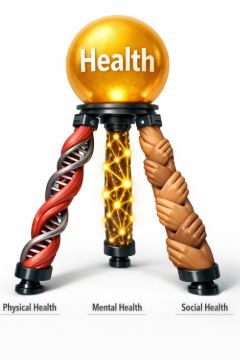
Figure-1: The Health Triangle showing Physical, Mental, and Social well-being. All three must be balanced.
2. Factors That Influence Our Health
Why do some people fall sick often while others stay fit? It depends on two main things: our lifestyle (how we live) and our environment (where we live).
A. Personal Lifestyle & Habits
Our daily choices build our health brick by brick. Here is what you need to do:
- Balanced Diet: We must eat nutritious food. A diet high in oil and sugar is dangerous. Did you know? 11.4% of India’s population is diabetic, and fast food is a leading cause. We need fresh fruits, vegetables, and whole grains.
- Physical Activity: You must stay active. Walking, running, cycling, or playing sports helps keep the body engine running smoothly.
- Sleep: Your body repairs itself when you sleep. Lack of sleep can lead to anxiety and disorders.
- Hygiene: Simple habits save lives. Regular handwashing alone reduces infections by 50%.
- Mental Peace: Practices like Yoga and meditation reduce anxiety and increase concentration.
B. Our Environment
You cannot be healthy in a dirty environment. Clean air and water are essential.
- Air Pollution: It is a public health emergency. Smoke and dust can cause asthma and coughing.
- Clean Surroundings: Look at the playgrounds around you. A dirty, garbage-filled area attracts flies and mosquitoes, which spread diseases. A clean park keeps you healthy.
Scientific Heritage: Even our ancient Ayurveda emphasizes Dinacharya (daily routine) and Ritucharya (seasonal routine) to maintain balance.
3. Understanding Disease: Signs vs. Symptoms
When the body’s normal functioning is disturbed, we call it a disease (literally “dis-ease” or lack of ease). But how do we identify it? Doctors rely on two tools:
| Feature | Symptoms | Signs |
|---|---|---|
| Definition | What the patient feels. | What can be seen or measured by others. |
| Examples | Headache, stomach pain, tiredness, nausea. | High fever (temperature), rash, swelling, high blood pressure. |
So, if you tell the doctor “I have a stomach ache,” that is a symptom. If the doctor uses a thermometer and says “You have 102°F fever,” that is a sign.
4. Classification of Diseases
Diseases are not all the same. We classify them based on how they are caused and how they spread.
Type 1: Communicable (Infectious) Diseases
These diseases can spread from an infected person to a healthy person. They are caused by pathogens like bacteria, viruses, fungi, and protozoa.
How do they spread? (Modes of Transmission)
- Through Air: When a patient coughs or sneezes, droplets carrying germs enter the air. Examples: Common cold, Influenza, Tuberculosis (TB).
- Through Contaminated Food & Water: Eating uncovered food or drinking dirty water. Examples: Cholera, Typhoid, Hepatitis A.
- Through Vectors: Insects that carry the pathogen from a sick person to a healthy person. Mosquitoes are common vectors. Examples: Malaria (Protozoa), Dengue (Virus).
- Direct Contact: Touching an infected person or their items (like towels). Example: Chickenpox, Ringworm.
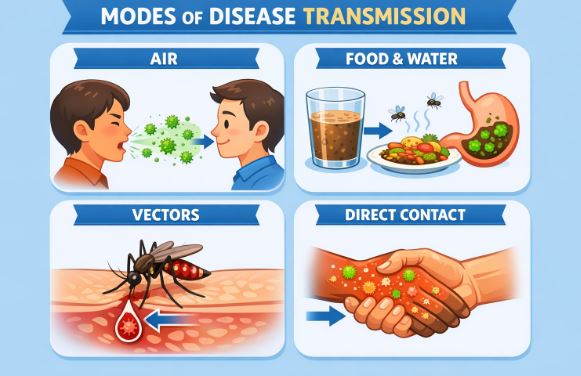
Figure-2: How diseases spread: Air, Water, Food, and Vectors (insects).
Type 2: Non-Communicable (Lifestyle) Diseases
These diseases do not spread from person to person. You cannot “catch” them. They are usually caused by bad habits, poor diet, genetics, or environment.
Common Examples:
- Diabetes: High blood sugar. Linked to inactivity and unhealthy eating.
- Hypertension (High Blood Pressure): Linked to stress and salt intake.
- Cancer: Linked to tobacco, pollution, and diet.
- Deficiency Diseases: Caused by lack of nutrients (e.g., Anaemia, Goitre).
A Serious Warning: Nowadays, non-communicable diseases (NCDs) cause the most deaths in India. This is because of our changing lifestyle—eating junk food, sitting with mobile phones, and not exercising.
5. Antibiotics and Their Misuse
When you get a bacterial infection, the doctor gives you Antibiotics. These are medicines that kill bacteria or stop them from growing.
History Corner: The first antibiotic, Penicillin, was discovered by Alexander Fleming in 1928. He noticed that a mould (fungus) was killing bacteria in his petri dish.
The Danger of Antibiotic Resistance
Many people make a mistake: they take antibiotics for a cold or flu. Remember: Antibiotics do NOT work on viruses!.
If we use antibiotics when not needed, or don’t finish the full course, the bacteria become smart. They learn to survive the medicine. This is called Antibiotic Resistance. These “superbugs” are very hard to kill later. So, never take antibiotics without a doctor’s prescription.
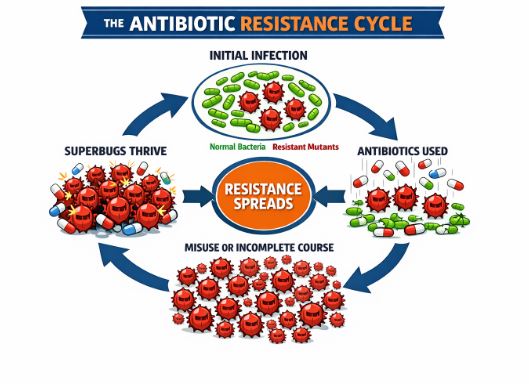
Figure-3: How resistance spreads. Misuse of antibiotics makes bacteria stronger and harder to treat.
6. Prevention: Immunity and Vaccination
Our body has a natural defense force called the Immune System. It fights against germs entering our body.
What is a Vaccine?
A vaccine is like a “practice match” for your immune system. It contains dead or weakened germs. When injected, your body learns to fight them without you getting sick. The immune system “remembers” this enemy. If the real germ attacks later, your body destroys it immediately. This is called Acquired Immunity.
The Story of Smallpox
Smallpox was a deadly disease. In the late 1700s, Edward Jenner noticed that milkmaids who got Cowpox (a mild disease) never got Smallpox. He used this observation to create the world’s first vaccine. Today, Smallpox has been completely eradicated from the world thanks to vaccines.
Indian Contribution: India is a global leader in vaccine production, supplying vaccines to over 100 countries. Scientists like Dr. Maharaj Kishan Bhan helped develop the Rotavirus vaccine to save children from diarrhoea.
7. Be a Young Scientist: Real-Life Application
Let’s apply what we learned. Suppose there is a Dengue outbreak in your area. What should you do?
- Identify the Cause: Dengue is spread by mosquitoes.
- Prevention: Stop mosquitoes from breeding. Do not let water stagnate in coolers or pots. Use mosquito nets and repellents. wear long sleeves.
- Observation: Look for symptoms like high fever, headache, and joint pain (also called break-bone fever).
This is how science helps us solve real-world problems!
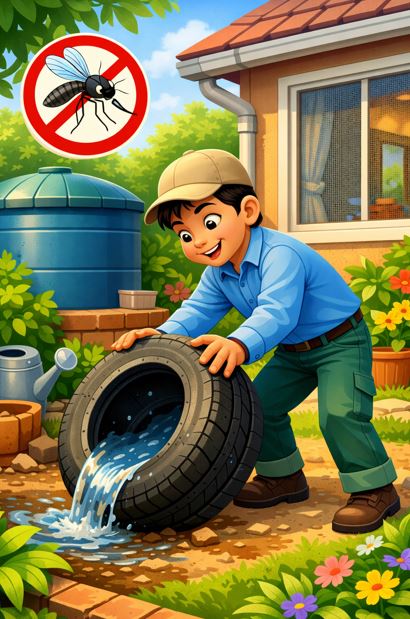
Figure-4: Preventing mosquito breeding is the key to stopping Dengue and Malaria.
Practice Questions (CBSE Pattern)
A. Very Short Answer Questions
Q1: What is the full form of WHO?
Answer: World Health Organization.
Q2: Name the vector that causes Malaria.
Answer: The mosquito is the vector for Malaria.
Q3: Who discovered the first antibiotic, Penicillin?
Answer: Alexander Fleming discovered Penicillin in 1928.
Q4: Define ‘Symptom’.
Answer: A symptom is what a patient feels, such as pain or tiredness.
B. Short Answer Questions
Q1: Why should we not take antibiotics for the common cold?
Answer: The common cold is caused by a virus. Antibiotics only kill bacteria and are not effective against viral infections.
Q2: Differentiate between Communicable and Non-communicable diseases.
Answer: Communicable diseases (e.g., Flu, TB) spread from person to person via pathogens. Non-communicable diseases (e.g., Diabetes, Asthma) do not spread between people and are often caused by lifestyle or environment.
Q3: How does a vaccine work?
Answer: A vaccine introduces dead or weakened pathogens into the body. This trains the immune system to recognize and fight the germ, providing memory for future protection.
Q4: List three ways to prevent communicable diseases.
Answer: 1. Wash hands frequently. 2. Cover mouth while coughing. 3. Drink clean/boiled water.
C. Long Answer Questions
Q1: “Health is more than just not falling sick.” Explain this statement with the Health Triangle.
Answer: According to the WHO, health is a state of complete physical, mental, and social well-being. Being disease-free only covers the physical aspect. To be truly healthy, one must also be mentally happy (free from unnecessary stress) and socially active (good relationships). The Health Triangle represents these three connected sides; if one is neglected, overall health suffers.
Q2: Discuss the rise of lifestyle diseases in India. What are the causes and solutions?
Answer: Non-communicable diseases like diabetes and heart issues are increasing in India.
Causes: Changes in lifestyle, such as eating processed/junk food, lack of exercise, increased screen time, and pollution.
Solutions: We must adopt a balanced diet (less oil/sugar), exercise regularly, manage stress, and ensure a clean environment.
D. Case-Based Question
Case: In a classroom, Rohan is coughing and sneezing without covering his mouth. Two days later, his bench-mate Amit also gets a fever and cough.
Q1: What mode of transmission is seen here?
Answer: This is transmission through air (droplet infection).
Q2: Suggest two precautions Rohan should have taken.
Answer: Rohan should have covered his mouth while coughing and washed his hands frequently.
E. Assertion–Reason
Assertion: We should avoid stagnant water in our surroundings.
Reason: Stagnant water is a breeding ground for mosquitoes which spread diseases like Dengue.
Answer: Both Assertion and Reason are true, and Reason is the correct explanation for Assertion.
Read Also
For official syllabus and textbooks, visit the
NCERT Official Website.