
1. Introduction | Class 10 Resources and Development Easy Notes
Hello students! In this chapter, we will learn about resources and how they are important for human life. Everything around us that helps in satisfying our needs and is useful for people is called a resource. Human beings use nature, technology, and knowledge together to develop resources.
Resources are not simply free gifts of nature. Human beings play an important role in converting natural materials into useful things. Proper use and conservation of resources are necessary because overuse can create serious environmental and social problems.
2. What are Resources?
Anything available in the environment that can be used to fulfill human needs is known as a resource. A thing becomes a resource only when it is technologically possible, economically useful, and culturally acceptable.
Resources can be classified in different ways. On the basis of origin, they are biotic and abiotic resources. On the basis of exhaustibility, they are renewable and non-renewable resources. They can also be classified according to ownership and development status.
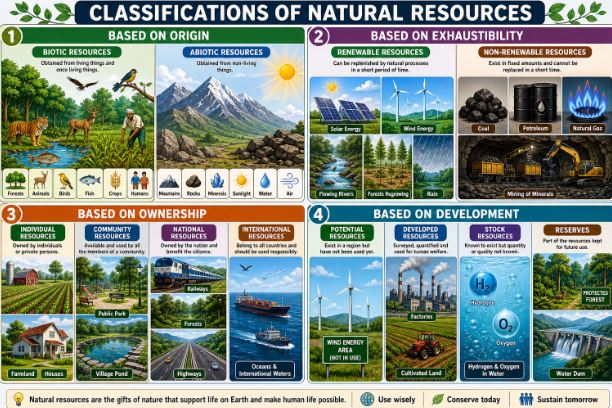
Figure-1: Different classifications of resources based on origin, ownership, exhaustibility, and development.
Biotic resources include living things such as forests, animals, and fisheries, while abiotic resources include non-living things like rocks and minerals. Renewable resources can be used again and again, whereas non-renewable resources take millions of years to form and may get exhausted.
3. Development of Resources and Sustainable Development
Resources are very important for maintaining the quality of human life. However, careless and excessive use of resources has created many problems such as environmental pollution, land degradation, global warming, and unequal distribution of wealth.
To solve these problems, sustainable development is necessary. Sustainable development means using resources carefully so that future generations can also fulfill their needs without environmental damage.
In 1992, the Earth Summit was held at Rio de Janeiro in Brazil where world leaders discussed environmental protection and sustainable development. Agenda 21 was adopted to encourage countries to work together for protecting the environment and improving human life.
4. Resource Planning in India
India has great diversity in resources. Some areas are rich in minerals, forests, or water resources, while some regions face shortages. Therefore, balanced resource planning is very important for the country.
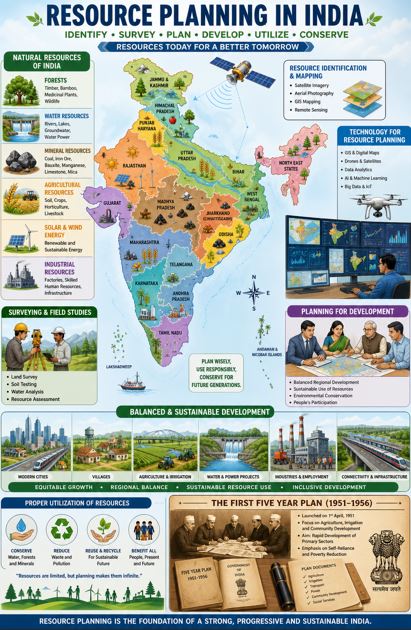
Figure-2: Resource planning helps in balanced development across different regions of India.
Resource planning includes identifying resources, surveying and mapping them, developing suitable technologies, and preparing plans for proper use. India has been making efforts for resource planning since the First Five Year Plan.
Technology, skilled people, and proper institutions are also necessary for development. Regions rich in resources may still remain backward if proper planning and technology are absent.
5. Land Resources and Land Utilisation
Land is one of the most valuable natural resources because almost all human activities depend on it. India has mountains, plains, plateaus, and islands which are used for different purposes such as agriculture, industry, forests, roads, and settlements.
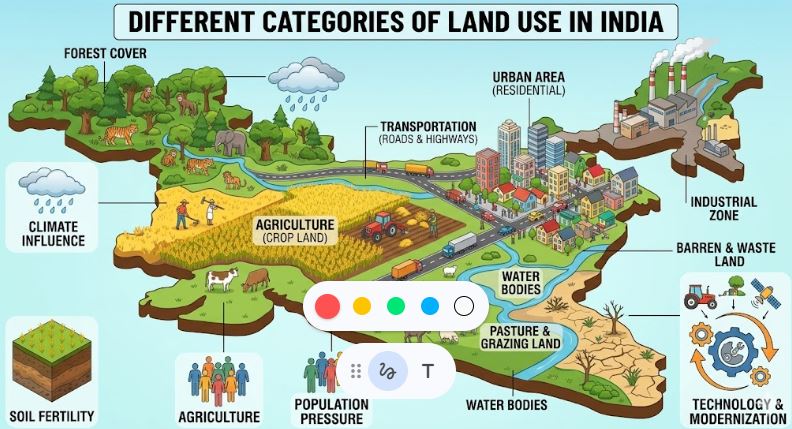
Figure-3: Different categories of land use in India.
Land is used for forests, agriculture, grazing, buildings, industries, roads, and other activities. The pattern of land use depends on physical factors such as climate and soil, as well as human factors like population and technology.
Net sown area refers to the land on which crops are grown. Forest area in India is lower than the desired level, which affects ecological balance and wildlife.
6. Land Degradation and Conservation Measures
Continuous use of land without proper care leads to land degradation. Human activities like deforestation, overgrazing, mining, quarrying, and over-irrigation damage the land.
In mining areas, deep scars are left after excavation. Over-irrigation in states like Punjab and Haryana increases salinity and waterlogging in soil. Industrial wastes also pollute land and water.
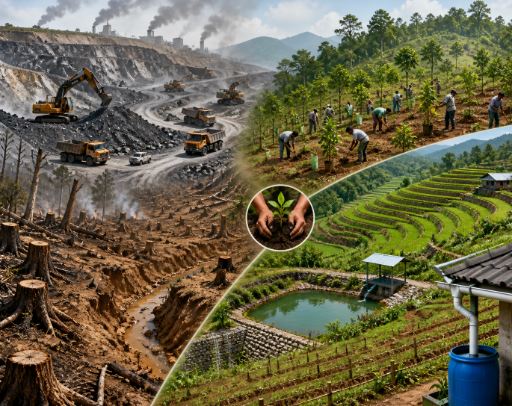
Figure-4: Human activities such as mining and deforestation cause land degradation.
Land degradation can be controlled through afforestation, proper management of grazing, controlling mining activities, treating industrial waste, and planting shelter belts in dry areas.
7. Soil as a Resource and Types of Soils
Soil is one of the most important natural resources because it supports plant growth and provides food for living organisms. Soil formation takes millions of years and depends on climate, rocks, vegetation, and relief features.
India has different types of soils because of its varied climate and landforms. The major soil types are alluvial soil, black soil, red and yellow soil, laterite soil, arid soil, and forest soil.
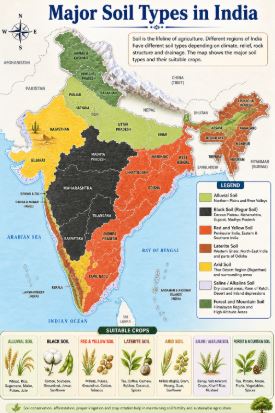
Figure-5: Map showing the major soil types found in India.
Alluvial soil is very fertile and found mainly in northern plains and river deltas. Black soil is ideal for cotton cultivation and can retain moisture for a long time. Red and yellow soils are found in low rainfall regions. Laterite soils are formed in areas of heavy rainfall and high temperature. Arid soils are sandy and saline, while forest soils are found in hilly and mountainous areas.
8. Soil Erosion and Soil Conservation
Soil erosion means the removal of the top fertile layer of soil by wind, water, or human activities. Deforestation, overgrazing, mining, and faulty farming methods increase soil erosion.
Running water creates gullies and ravines, while strong winds blow away loose soil in dry areas. Soil erosion reduces fertility and affects agriculture badly.
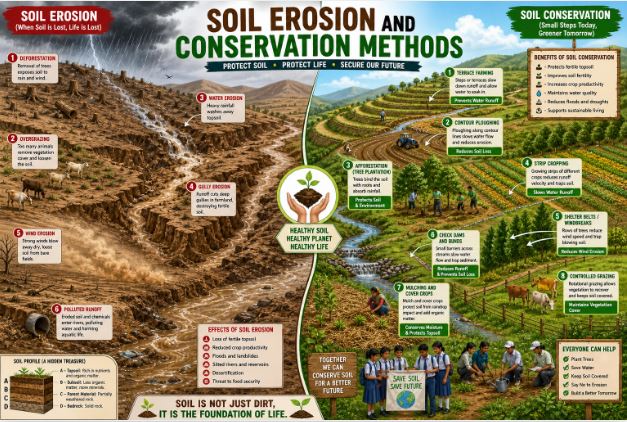
Figure-6: Different methods used to prevent soil erosion.
Several methods are used to conserve soil. Contour ploughing, terrace farming, strip cropping, afforestation, and shelter belts help in reducing soil erosion and protecting fertile land.
9. Key Takeaways
- Resources are useful materials that satisfy human needs.
- Resources can be renewable, non-renewable, biotic, or abiotic.
- Sustainable development means meeting present needs without harming future generations.
- Resource planning is necessary for balanced regional development.
- Land is used for agriculture, forests, settlements, industries, and transport.
- Land degradation is caused by deforestation, mining, overgrazing, and industrial waste.
- Soil is an important natural resource formed over millions of years.
- India has alluvial, black, red, laterite, arid, and forest soils.
- Soil erosion can be controlled through terrace farming, contour ploughing, and afforestation.
10. Practice Section: Master the Chapter!
Test your understanding of the chapter with these important practice questions.
Part A: True or False (10 Questions)
- Resources are always free gifts of nature.
- Renewable resources can be used repeatedly.
- Black soil is ideal for growing cotton.
- Laterite soil is rich in humus everywhere.
- Deforestation causes land degradation.
- Contour ploughing helps reduce soil erosion.
- Alluvial soil is mostly found in river plains.
- Over-irrigation may increase salinity in soil.
- Arid soils contain a high amount of moisture.
- Sustainable development protects future generations.
Click to view True/False Answers
- False
- True
- True
- False
- True
- True
- True
- True
- False
- True
Part B: Multiple Choice Questions (10 Questions)
- Which of the following is a renewable resource?
A) Coal
B) Petroleum
C) Solar energy
D) Natural gas - Which soil is ideal for cotton cultivation?
A) Red soil
B) Black soil
C) Laterite soil
D) Arid soil - Which conference adopted Agenda 21?
A) Earth Summit
B) Kyoto Summit
C) Paris Summit
D) Geneva Summit - Which activity is a major cause of land degradation?
A) Afforestation
B) Terrace farming
C) Overgrazing
D) Crop rotation - Which soil is most fertile in India?
A) Arid soil
B) Laterite soil
C) Black soil
D) Alluvial soil - What is the upper fertile layer of soil called?
A) Bedrock
B) Topsoil
C) Subsoil
D) Parent rock - Which type of soil is found in dry desert areas?
A) Forest soil
B) Black soil
C) Arid soil
D) Alluvial soil - What helps in controlling soil erosion on slopes?
A) Mining
B) Terrace farming
C) Deforestation
D) Overgrazing - Which resource takes millions of years to form?
A) Renewable resource
B) Human resource
C) Non-renewable resource
D) Biotic resource - Which state is known for black soil?
A) Maharashtra
B) Punjab
C) Assam
D) Bihar
Click to view MCQ Answers
- C) Solar energy
- B) Black soil
- A) Earth Summit
- C) Overgrazing
- D) Alluvial soil
- B) Topsoil
- C) Arid soil
- B) Terrace farming
- C) Non-renewable resource
- A) Maharashtra
Part C: Short Answer Questions (5 Questions)
- What is sustainable development?
- Name any two causes of land degradation.
- Which soil is suitable for cotton cultivation?
- What is soil erosion?
- Name any two methods of soil conservation.
Click to view Short Answers
- Sustainable development means using resources carefully without harming future generations.
- Deforestation and overgrazing are two causes of land degradation.
- Black soil is suitable for cotton cultivation.
- Soil erosion is the removal of the top fertile layer of soil by wind or water.
- Contour ploughing and terrace farming are two methods of soil conservation.
Part D: Long Answer Questions (5 Questions)
- Explain the importance of resource planning in India.
- Describe the causes of land degradation in India.
- Explain the major types of soils found in India.
- What is soil erosion? Explain methods to control it.
- Why is sustainable development necessary?
Click to view Long Answers
- Resource planning is important because India has uneven distribution of resources. Some regions are rich in minerals and forests while others lack important resources. Proper planning helps in balanced regional development and proper use of resources. It includes surveying, mapping, technology development, and conservation methods.
- Land degradation is caused by human activities such as deforestation, overgrazing, mining, quarrying, and over-irrigation. Industrial wastes also pollute land and water. These activities reduce soil fertility and damage the environment.
- The major soil types in India are alluvial, black, red and yellow, laterite, arid, and forest soils. Alluvial soil is fertile and found in plains. Black soil is suitable for cotton. Red soil develops in low rainfall areas. Laterite soil forms in heavy rainfall regions. Arid soil is sandy and saline, while forest soil is found in hilly areas.
- Soil erosion is the removal of fertile topsoil by water, wind, or human activities. It can be controlled by contour ploughing, terrace farming, strip cropping, afforestation, and shelter belts. These methods help protect soil fertility and reduce erosion.
- Sustainable development is necessary to protect natural resources for future generations. Overuse of resources causes pollution, land degradation, and climate problems. Sustainable development encourages balanced growth while protecting the environment.
Read Also: Class 9 Social Science (Contemporary India) All Chapters
For official syllabus and textbooks, visit the NCERT Official Website.