
Chapter 7: How do Organism Reproduce?
1. Introduction: The Secret of Life | How do Organisms Reproduce class 10 NCERT solutions
Hello students! Let’s start with a very basic question. We eat food to get energy. We breathe to get oxygen. We excrete to remove waste. These are “Life Processes” because if we stop doing them, we die.
But Reproduction is different. If you decide not to have children, will you die? No. You will live a healthy life. So, why is Reproduction considered a life process?
Reproduction is not for the survival of the individual (you), but it is necessary for the survival of the species (humans).
Imagine if every human on Earth decided not to reproduce today. Within 100 years, the last human would die of old age, and the human race would vanish from Earth. So, to keep the species alive on this planet, organisms reproduce.
1.1 The Blueprint: How do bodies know what to build?
When a cat gives birth, why does it always produce a kitten and not a puppy? How does the body know how to make a kitten?
The answer lies deep inside the Cell. Inside the cell is the Nucleus. Inside the nucleus, there is a special molecule called DNA (Deoxyribonucleic Acid).
Think of DNA as a Instruction Manual or a Recipe Book. It contains all the details: “Make two eyes here,” “Put a tail there,” “Make the fur black,” etc.
The Process of Reproduction starts with DNA Copying:
- Before a parent cell divides to make a new cell, it must copy its DNA (Recipe Book).
- It creates two copies of the DNA.
- One copy stays with the parent, and the other goes to the new cell.
- Along with DNA, the cell also creates a new cellular apparatus (cytoplasm, organelles) because DNA cannot function alone.
1.2 The Importance of Variation (Changes)
Now, here is the interesting part. When the cell copies the DNA, the process is biochemical. No biochemical reaction is 100% perfect. Sometimes, a small mistake happens during copying.
- Example: Imagine you are copying a long essay from the blackboard. You might accidentally write “their” instead of “there”.
In biology, these small mistakes in DNA copying create Variations. This means the baby will look mostly like the parent but will be slightly different.
Let’s understand this with a story.
Imagine a pond full of bacteria. They are all clones (identical). They can survive in water up to 30°C.
Scenario 1 (No Variation): Suddenly, due to global warming, the water temperature hits 40°C. Since all bacteria are the same, all of them die. The species is wiped out.
Scenario 2 (With Variation): Due to small DNA errors, a few bacteria were slightly different. They had a “Heat-Resistant” variation. When the temperature hit 40°C, most bacteria died, but these few survived! They reproduced, and soon the pond was full of heat-resistant bacteria.
Conclusion: Variation helps a species adapt to changing environments and prevents extinction.
2. Asexual Reproduction: Solo Mode
In this mode, a single parent produces offspring. There is no need for a partner (male/female). It is very fast, but creates exact copies (clones).
2.1 Fission (Splitting)
This is common in unicellular (single-celled) organisms. The cell simply splits.
A. Binary Fission (Splitting into Two)
Seen in Amoeba and Leishmania.
Step-by-Step in Amoeba:
- The parent Amoeba eats and grows to full size.
- The Nucleus lengthens and divides into two (Karyokinesis).
- The Cytoplasm narrows in the middle and divides (Cytokinesis).
- Two daughter Amoebae are formed.
[Image of Binary Fission in Amoeba]
Note: Amoeba can split in any direction. But Leishmania (which causes Kala-azar disease) has a whip-like tail, so it splits in a specific vertical line.
B. Multiple Fission (Splitting into Many)
Seen in Plasmodium (Malarial Parasite).
Sometimes, conditions are bad outside. The cell forms a hard protective wall (Cyst). Inside the cyst, the nucleus divides many, many times. When conditions become good, the cyst bursts, and hundreds of baby cells come out at once.
2.2 Fragmentation
Seen in Spirogyra (Green slimy algae found in ponds).
Spirogyra is a long, thread-like structure. When it matures, it simply breaks into smaller pieces called fragments. Each fragment grows into a new Spirogyra.
Common Doubt: Can humans reproduce by fragmentation?
No! If you cut a finger, it won’t grow into a new human. Why? Because humans are complex. We have cells organized into tissues, tissues into organs, and organs into systems. A random piece of flesh does not have the instructions to build a heart or brain. Simple organisms like Spirogyra are just a collection of similar cells, so they can do it.
2.3 Regeneration
Seen in Planaria and Hydra.
This is fascinating. If you accidentally cut a Planaria worm into three pieces (Head, Middle, Tail):
- The Head will grow a new tail.
- The Tail will grow a new head.
- The Middle will grow both a head and a tail!
How? They have specialized Stem Cells. These cells can divide rapidly and change (differentiate) into whatever tissue is missing.
[Image of Regeneration in Planaria]
2.4 Budding
Seen in Hydra and Yeast.
Hydra is a multicellular animal. Under good conditions, a small bump appears on its body due to repeated cell division. This bump is called a Bud.
- The bud grows bigger.
- It develops a tiny mouth and tentacles.
- Once it is strong enough, it pinches off from the parent and swims away to live alone.
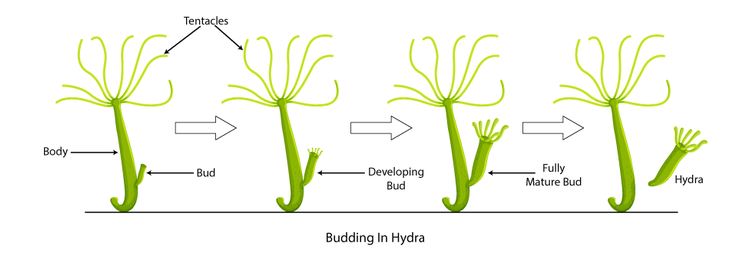
Figure 1: Budding in Hydra (The small outgrowth develops into a new individual).
2.5 Vegetative Propagation
This is reproduction in plants using vegetative parts (Roots, Stem, Leaves) instead of seeds.
Natural Methods:
- By Leaves: Bryophyllum. The leaves of this plant have notches on the edges. If a leaf falls on moist soil, tiny buds grow from these notches and become new plants.
- By Stem: Potato. Have you seen “eyes” or white buds on old potatoes? If you plant a piece of potato with an eye, a new plant grows.
- By Roots: Sweet Potato.
Artificial Methods (Used by Farmers):
- Cutting: Cut a stem of Rose or Sugarcane and plant it.
- Layering: Bend a branch of Jasmine towards the ground and cover it with soil. Roots grow, and then you can cut it from the parent.
- Grafting: Join the stem of a tasty Mango (Scion) onto the strong root of a wild Mango (Stock). You get a strong tree with tasty fruit.
- Speed: Plants grown this way bear flowers and fruits much faster than those grown from seeds.
- Seedless Plants: Plants like Banana, Orange, and Rose have lost the ability to produce seeds. This is the only way to grow them.
- Genetic Consistency: The new plant is a copy of the parent. If you have a mango tree with very sweet fruit, the new tree will have the exact same sweet fruit.
2.6 Spore Formation
Seen in Rhizopus (Bread Mould).
If you leave moist bread out for a few days, you see white/green cottony growth. Under a microscope, it looks like sticks with balls on top.
- The stick is called Hyphae.
- The ball on top is called Sporangium.
- Inside the ball are hundreds of tiny cells called Spores.
The spores have thick walls to protect them from heat and dryness. When the sporangium bursts, spores float in the air. As soon as they land on moist food, they start growing.
3. Sexual Reproduction in Flowering Plants
Now we move to the complex stuff. Sexual reproduction needs two parents. Why? Because combining DNA from two parents creates Variation (which we learned is good for survival).
In plants, the reproductive part is the FLOWER.
3.1 Parts of a Flower
- Sepals: Green leaf-like parts at the bottom. They protect the flower when it is a bud.
- Petals: Colorful and scented parts to attract bees and butterflies.
- Stamen (The Male Part):
- It has a stalk called the Filament.
- On top is a swollen bag called the Anther.
- The Anther produces yellow powder called Pollen Grains. These contain the male gametes.
- Pistil / Carpel (The Female Part): It is in the center.
- Stigma: The sticky top part (to catch pollen).
- Style: The long tube connecting top to bottom.
- Ovary: The swollen bottom part. It contains Ovules (eggs).
3.2 Step 1: Pollination
The male gamete is in the pollen (on the anther). The female gamete is in the ovary. They need to meet. The transfer of pollen from Anther to Stigma is called Pollination.
- Self-Pollination: Pollen moves within the same flower.
- Cross-Pollination: Pollen moves from one flower to a different flower. This is done by wind, water, or animals. (Cross-pollination is better because it mixes DNA from different plants).
3.3 Step 2: Fertilization (The Journey)
Once the pollen lands on the sticky Stigma, it doesn’t just sit there.
- The pollen grain germinates and sends out a long tube called the Pollen Tube.
- This tube travels through the Style and reaches the Ovary.
- The male gamete travels down this tube.
- It enters the Ovule and fuses with the female egg.
- This fusion is called Fertilization. A Zygote is formed.
[Image of fertilization in plants]
3.4 Step 3: Becoming a Fruit
After fertilization, the flower’s job is done. The petals and stamen fall off.
- The Zygote divides and becomes the Embryo (baby plant).
- The Ovule develops a hard coat and becomes the Seed.
- The Ovary grows big, stores food, and becomes the Fruit.
4. Sexual Reproduction in Humans
Humans have very complex bodies. We reproduce sexually. But a baby boy or girl cannot reproduce. The body must first grow and mature.
4.1 Puberty: The Age of Change
There is a specific time in life (usually teenage years) when the body prepares for reproduction. This is called Puberty.
- Hormones:
- Boys produce Testosterone.
- Girls produce Estrogen.
- Changes in Boys: Voice cracks and becomes deep, thick hair grows on the face (beard), penis and testes enlarge, skin becomes oily.
- Changes in Girls: Breast size increases, menstruation (periods) start, skin becomes soft.
- Both: Hair growth in armpits and genital area.
4.2 The Male Reproductive System
The job of the male system is to make sperm and deliver it to the female.
[Image of Human Male Reproductive System]
- Testes: The factory of sperm.
- Humans have two testes.
- They are located outside the body in a bag called the Scrotum.
- Why outside? Sperm formation needs a temperature 2-3°C lower than body temperature. If they were inside, the body heat would kill them.
- Vas Deferens: A long tube that carries sperm from testes towards the penis.
- The Glands (Prostate & Seminal Vesicle):
- Sperm are cells; they need food and a vehicle to swim.
- These glands add a nutrient-rich fluid to the sperm.
- Sperm + Fluid = Semen.
- Penis: The organ that injects sperm into the female body.
4.3 The Female Reproductive System
The female system is more complex because it has to produce the egg, receive the sperm, and hold the baby for 9 months.
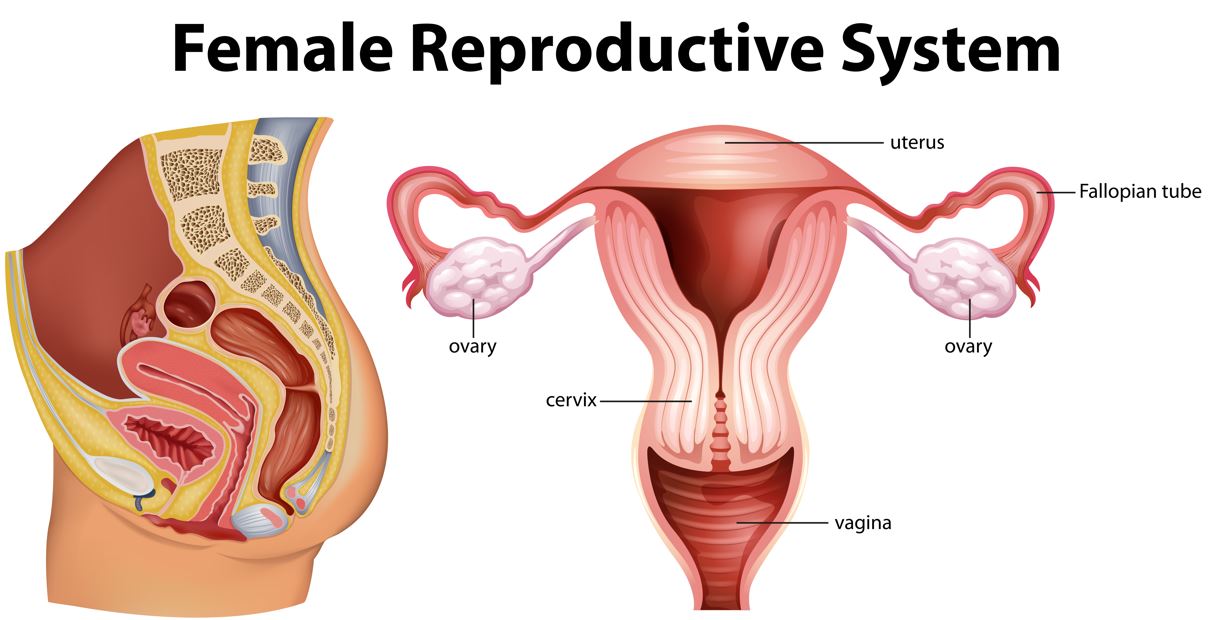
Figure 2: The female reproductive system includes ovaries, fallopian tubes, and the uterus.
- Ovaries: Two almond-shaped organs.
- They produce eggs (Ova).
- A girl is born with thousands of immature eggs. At puberty, they start maturing.
- One egg is released every month (alternating ovaries).
- Fallopian Tubes (Oviduct): Thin tubes connecting ovaries to the uterus.
- Crucial Point: Fertilization (sperm meeting egg) happens HERE, not in the uterus.
- Uterus (Womb): A hollow, muscular bag shaped like an inverted pear. This is where the baby grows.
- Cervix: The narrow door of the uterus.
- Vagina: The tube leading to the outside. It is the birth canal.
4.4 The Process: How a Baby is Made
Step 1: Fertilization
During mating, millions of sperm are released into the vagina. They swim up through the cervix and uterus into the fallopian tubes. If an egg is waiting there, one sperm enters it. They fuse to form a Zygote.
Step 2: Implantation
The zygote divides rapidly as it moves down to the uterus. It becomes a ball of cells (Embryo). It buries itself into the soft, thick lining of the uterus wall. This is called Implantation. Now the woman is pregnant.
Step 3: Nutrition (The Placenta)
The embryo needs food. A special disc-shaped tissue grows between the mother and the baby called the Placenta.
It acts like a bridge.
It takes Glucose and Oxygen from Mother → to Baby.
It takes Waste from Baby → to Mother.
Step 4: Birth
After about 9 months (Gestation period), the baby is fully formed. The muscles of the uterus contract rhythmically, and the baby is pushed out through the vagina.
4.5 What if Fertilization DOES NOT happen? (Menstruation)
This is a cycle that happens every month (approx 28 days).
- Every month, the Ovary releases one egg.
- The Uterus thinks, “Maybe a baby is coming!” So, it prepares a thick, blood-rich lining to receive the embryo.
- If the egg is NOT fertilized, it survives for one day and dies.
- The Uterus realizes the lining is not needed. So, the lining breaks down.
- The blood, mucus, and the dead egg come out through the vagina.
- This is called Menstruation (or Periods). It lasts 2-8 days.
5. Reproductive Health
Reproduction brings responsibility. Unsafe sex can lead to diseases or unwanted pregnancy.
5.1 Sexually Transmitted Diseases (STDs)
These are infections passed during sexual contact.
- Bacterial: Gonorrhoea, Syphilis. (Can be cured with medicines).
- Viral: Warts, HIV-AIDS. (Viral diseases are very dangerous. HIV destroys the immune system and has no permanent cure).
Protection: Using condoms helps prevent these diseases.
5.2 Contraception (Avoiding Pregnancy)
To plan a family, people use birth control methods:
| Method | Examples | How it works |
|---|---|---|
| Mechanical | Condoms, Diaphragm | Creates a physical wall. Sperm cannot reach the egg. |
| Chemical | Oral Pills | Hormones that stop the ovary from releasing an egg. |
| IUCD | Copper-T | Placed inside uterus. Copper kills sperm. |
| Surgical | Vasectomy (Male), Tubectomy (Female) | Tubes are cut and tied. Permanent solution. |
6. Practice Questions & Solutions
Multiple Choice Questions (MCQ)
- In human females, an event that indicates the onset of reproductive phase is:
(a) Growth of body (b) Change in hair pattern (c) Menstruation (d) Change in voice
Ans: (c) Menstruation. - Which among the following diseases is not sexually transmitted?
(a) Syphilis (b) Hepatitis (c) HIV-AIDS (d) Gonorrhoea
Ans: (b) Hepatitis. - The ability of a cell to divide into several cells during reproduction in Plasmodium is called:
(a) Budding (b) Reduction division (c) Binary fission (d) Multiple fission
Ans: (d) Multiple fission.
Important Short Questions
Q1: Why is DNA copying not perfect?
Ans: DNA copying involves chemical reactions. No biochemical reaction is 100% reliable. Therefore, slight errors occur, leading to variation.
Q2: What is the function of the Scrotum?
Ans: The scrotum keeps the testes outside the abdominal cavity. This maintains the temperature of testes 2-3°C lower than body temperature, which is essential for sperm production.
Long Answer Question
Q3: Explain the menstrual cycle.
Ans:
1. Preparation: Every month, the uterus prepares a thick lining of blood and mucus to receive a zygote.
2. Ovulation: The ovary releases one egg.
3. No Fertilization: If sperm does not fuse with the egg, the egg dies.
4. Breakdown: The uterus lining is not needed anymore. It breaks down and comes out through the vagina as blood.
5. This cycle lasts 28 days.
Read Also:
Class 10 Chapter 6- Control and Coordination
For more check official website of
NCERT