Chapter 6: Control and Coordination
1. Introduction: The Need for Systems | Control and Coordination class 10 NCERT solutions
What distinguishes a living organism? One of the defining characteristics of life is movement. But this movement is not random. When a seed germinates, the root goes down, and the stem comes up. If you touch a hot object, you pull your hand away. If a cat sees a mouse, it runs.
These movements are responses to stimuli. A stimulus is any change in the environment (heat, light, sound, smell, touch) that triggers a reaction in an organism.
To survive, organisms must be able to detect these changes and respond efficiently. This requires two things:
- Control: The power to start, slow down, or stop a specific activity.
- Coordination: The working together of various organs of an organism in a systematic manner to produce a proper reaction to the stimulus.
In multicellular organisms like humans, specialized tissues are used to provide these control and coordination activities: the Nervous System and the Endocrine (Hormonal) System.
2. The Animal Nervous System: The High-Speed Network 🧠
The nervous system creates a network of specialized tissue specifically designed for the rapid conduction of information via electrical impulses. It receives information from the environment via Receptors.
2.1 Receptors: The Input Devices
Receptors are specialized tips of some nerve cells that detect information from the environment. They are located in our sense organs:
- Photoreceptors (Eyes): Detect light.
- Phonoreceptors (Ears): Detect sound.
- Olfactory Receptors (Nose): Detect smell.
- Gustatory Receptors (Tongue): Detect taste.
- Thermoreceptors (Skin): Detect heat/cold and touch.
2.2 The Neuron: Structure and Function
The Neuron (or nerve cell) is the structural and functional unit of the nervous system. It is the longest cell in the human body.
Parts of a Neuron:
- Dendrites: Short, branched structures projecting from the cell body. They acquire information.
- Cell Body (Cyton): Contains the nucleus and cytoplasm. The information acquired by dendrites travels through here as an electrical impulse.
- Axon: A long single fiber that transmits the impulse away from the cell body to the next neuron. It is often covered by a protective Myelin Sheath.
- Nerve Ending: The branched end of the axon where the electrical signal is converted into a chemical signal.
Mechanism of Transmission:
- Information is acquired at the tip of the dendrite.
- This sets off a chemical reaction that creates an electrical impulse.
- The impulse travels from the dendrite to the cell body, and then along the axon to its end.
- The Synapse: At the end of the axon, the electrical impulse sets off the release of some chemicals (neurotransmitters). These chemicals cross the gap (synapse) and start a similar electrical impulse in a dendrite of the next neuron.
- This is how nervous impulses travel in the body, finally reaching an effector (like a muscle or gland).
2.3 The Reflex Arc: Automatic Response
Reflex Action: A sudden, unconscious, and involuntary response to a stimulus. Examples: Sneezing, blinking, pulling a hand away from a hot plate.
[Image of reflex arc diagram class 10]
The Pathway (Reflex Arc):
Since thinking takes time, the body uses a shortcut. The nerves from all over the body meet in a bundle in the spinal cord on their way to the brain. Reflex arcs are formed in the Spinal Cord itself, although the information input also goes on to reach the brain.
Sequence:
Stimulus (Heat) → Receptor (Skin) → Sensory Neuron → Spinal Cord (Relay Neuron) → Motor Neuron → Effector (Muscle in Arm) → Response (Lifting hand)
2.4 The Central Nervous System (Human Brain)
The CNS consists of the Brain and the Spinal Cord. The Brain is the highest coordinating center in the body.
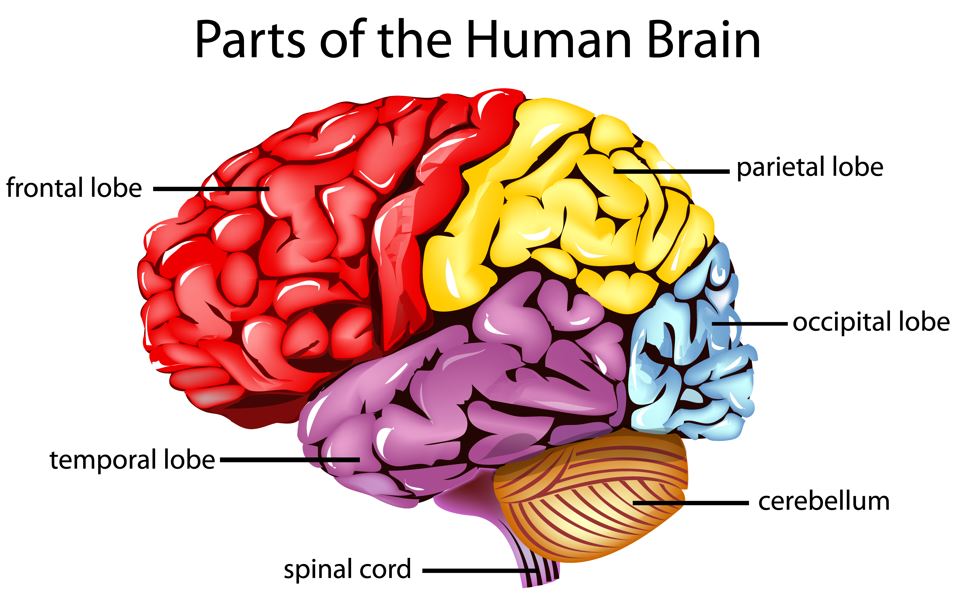
Figure 1: The Human Brain controls voluntary actions, balance, and involuntary life processes.
A. Fore-brain (The Thinking Part)
This is the largest and most complex part, primarily the Cerebrum.
- Sensory Regions: Receive sensory impulses from various receptors (hearing, smell, sight).
- Association Areas: Where sensory information is interpreted by putting it together with information from other receptors and information already stored in memory.
- Motor Regions: Instructions are sent to muscles to perform voluntary actions (like writing or walking).
- Hypothalamus: Controls the urge to eat (hunger) and body temperature.
B. Mid-brain
Connects the fore-brain and hind-brain. It controls reflex movements of the head, neck, and trunk in response to visual and auditory stimuli (e.g., change in pupil size).
C. Hind-brain (The Life Support)
Controls involuntary actions which we cannot control by thinking.
- Cerebellum: Responsible for precision of voluntary actions and maintaining the posture and balance of the body (e.g., riding a bicycle, picking up a pen).
- Medulla: Controls involuntary actions like blood pressure, salivation, and vomiting.
- Pons: Regulates respiration.
Protection of CNS:
Brain: Sits inside a bony box (Cranium/Skull). Inside the box, the brain is contained in a fluid-filled balloon (Cerebrospinal Fluid – CSF) which provides shock absorption. Layers called Meninges also protect it.
Spinal Cord: Protected by the vertebral column (backbone).
3. Coordination in Plants: Silent Intelligence 🌱
Plants have no nervous system and no muscles. So how do they respond? They use electrical-chemical means to convey information from cell to cell, but unlike animals, there is no specialized tissue for conduction.
3.1 Nastic Movements (Growth Independent)
These movements happen immediately in response to a stimulus and are not directional.
Example: Mimosa pudica (Touch-me-not plant).
Mechanism: Plant cells change shape by changing the amount of water in them, resulting in swelling or shrinking. When touched, specific cells lose water, causing the leaf to droop.
3.2 Tropic Movements (Growth Dependent)
These are directional movements where the plant grows towards or away from a stimulus. These are slow processes.
- Phototropism (Light): Shoots bend towards light (positive), roots bend away (negative).
- Geotropism (Gravity): Roots grow downward (positive), shoots grow upward (negative).
- Hydrotropism (Water): Roots grow towards water.
- Chemotropism (Chemicals): Growth of pollen tubes towards ovules.
- Thigmotropism (Touch): In climbing plants (tendrils), the part of the tendril in contact with the object does not grow as rapidly as the part away from the object. This causes the tendril to circle around the object.
3.3 Phytohormones (Plant Hormones)
Chemical compounds that help coordinate growth, development, and responses to the environment.
| Hormone | Function |
|---|---|
| Auxin | Synthesized at the shoot tip. Helps cells grow longer. Responsible for phototropism (accumulates on the shady side, causing those cells to grow faster, bending the plant towards light). |
| Gibberellins | Help in the growth of the stem. |
| Cytokinins | Promote cell division. Present in greater concentration in areas of rapid cell division (fruits and seeds). |
| Abscisic Acid (ABA) | Inhibits growth. Causes wilting of leaves. Often called the “stress hormone”. |
4. The Endocrine System: Chemical Coordination 📡
While the nervous system is fast, it cannot reach every single cell, and its electrical impulses act briefly. Hormonal coordination solves this. Hormones are chemical messengers secreted in trace amounts by endocrine glands directly into the blood.
[Image of human endocrine system diagram]
Major Glands and Their Functions
Below is a detailed breakdown of the key hormones:
- Hypothalamus: Located in the brain. It releases specific hormones that stimulate the Pituitary gland to release its hormones.
- Pituitary Gland (The Master Gland): Located at the base of the brain.
- Growth Hormone (GH): Regulates growth and development.
Disorder: Deficiency in childhood causes Dwarfism; excess causes Gigantism.
- Growth Hormone (GH): Regulates growth and development.
- Thyroid Gland: Located in the neck.
- Thyroxin: Regulates carbohydrate, protein, and fat metabolism for best balance for growth.
Note: Iodine is essential for the synthesis of thyroxin.
Disorder: Iodine deficiency causes Goitre (swollen neck).
- Thyroxin: Regulates carbohydrate, protein, and fat metabolism for best balance for growth.
- Adrenal Glands: Located on top of each kidney.
- Adrenaline: The “Fight or Flight” hormone. It is secreted directly into the blood and carried to different parts of the body.
Effects: Heart beats faster to supply more oxygen to muscles; blood to the digestive system and skin is reduced; breathing rate increases.
- Adrenaline: The “Fight or Flight” hormone. It is secreted directly into the blood and carried to different parts of the body.
- Pancreas: Located below the stomach.
- Insulin: Regulates blood sugar levels.
Disorder: Deficiency leads to Diabetes (high blood sugar).
- Insulin: Regulates blood sugar levels.
- Gonads (Testes & Ovaries):
- Testosterone (Males): Causes changes associated with puberty (voice change, beard growth).
- Oestrogen (Females): Controls changes during puberty (menstrual cycle, mammary gland development).
Feedback Mechanisms
The timing and amount of hormone released are regulated by feedback mechanisms. Hormones should be secreted in precise quantities.
Example (Blood Sugar Control):
1. Blood sugar level rises (after a meal).
2. Detected by cells of the Pancreas.
3. Pancreas synthesizes and releases more Insulin.
4. Blood sugar falls (cells use it up).
5. Pancreas detects the drop and stops secreting Insulin.
This is a Negative Feedback Loop.
5. Comprehensive Question Bank
Multiple Choice Questions (MCQ)
- A student accidentally steps on a sharp object and immediately lifts their foot. This action is coordinated by the:
(a) Cerebellum (b) Spinal Cord (c) Medulla (d) Fore-brain - A potted plant is placed horizontally. After a few days, the shoot bends upwards and the roots bend downwards. This demonstrates:
(a) Phototropism and Hydrotropism (b) Geotropism only (c) Phototropism and Geotropism (d) Chemotropism only - After a large meal, which hormone is released to help lower blood glucose levels?
(a) Adrenaline (b) Thyroxine (c) Glucagon (d) Insulin - Which part of a neuron is specifically designed to receive signals from other neurons?
(a) Axon (b) Myelin Sheath (c) Dendrite (d) Nerve ending - In a synapse, chemical signal is transmitted from:
(a) Dendritic end of one neuron to axonal end of another neuron
(b) Axon to cell body of the same neuron
(c) Cell body to axonal end of the same neuron
(d) Axonal end of one neuron to dendritic end of another neuron
MCQ Answers & Explanations:
- 1. (b) Spinal Cord – Reflex actions are processed in the spinal cord for speed.
- 2. (b) Geotropism only – Gravity (Geo) causes shoots to go up (negative geotropism) and roots down (positive).
- 3. (d) Insulin – Insulin lowers blood sugar by helping cells absorb it.
- 4. (c) Dendrite – Dendrites are the receiving branches of the neuron.
- 5. (d) – The nerve ending releases chemicals that cross the synapse to the next dendrite.
Short Answer Questions
- Q: Why is the use of iodised salt advisable?
A: Iodine is necessary for the thyroid gland to make thyroxin hormone. Thyroxin regulates carbohydrate, protein, and fat metabolism in the body so as to provide the best balance for growth. Iodine deficiency leads to Goitre. - Q: What happens at the synapse between two neurons?
A: When an electrical impulse reaches the end of the axon of a neuron, it releases chemicals called neurotransmitters. These chemicals cross the gap (synapse) and start a similar electrical impulse in the dendrite of the next neuron. This ensures one-way flow of information. - Q: Differentiate between Involuntary Actions and Reflex Actions.
A:- Involuntary Actions: Controlled by the Medulla and Mid-brain (e.g., heart beating, digestion). They happen continuously without our will.
- Reflex Actions: Controlled by the Spinal Cord. They are sudden responses to a specific external stimulus (e.g., touching a hot pan) to prevent harm.
Long Answer Questions
- Q: Explain the mechanism of Phototropism in plants with respect to Auxin.
A:- When growing plants detect light, a hormone called auxin is synthesized at the shoot tip, which helps the cells to grow longer.
- When light is coming from one side of the plant, auxin diffuses towards the shady side of the shoot.
- This concentration of auxin stimulates the cells on the shady side to grow longer than the cells on the light side.
- As a result, the plant appears to bend towards the light.
- Q: Compare and contrast the Nervous System and Hormonal System.
A:Feature Nervous System Hormonal System Signal Type Electrical impulses (and chemical at synapse). Chemical messengers (Hormones). Transmission Through nerve fibres (Neurons). Through blood plasma. Speed Very fast. Generally slow. Effect Short-lived. Prolonged/Long-lasting. Reach Connected cells only (some cells are not connected). Reaches every cell via blood.