Chapter 5: Life Processes

1. Introduction to Life Processes | Life Processes class 10 NCERT solutions
What defines being “alive”? While we can easily tell that a dog running or a cow chewing cud is alive, it becomes harder when an organism is asleep or when we look at plants. The defining characteristic of life is not just visible movement, but molecular movement. All living organisms are made of organized structures (cells, tissues), and these structures tend to break down over time due to environmental effects. If this order breaks down, the organism dies.
To prevent this breakdown, living beings must constantly perform maintenance and repair work. This leads us to the definition:
Life Processes are the basic essential activities performed by an organism to maintain its life on Earth. Even when we are sitting idle or sleeping, these maintenance jobs are going on.
The Four Pillars of Life Maintenance
Since these maintenance processes require energy and raw materials, there is a specific system for each:
- Nutrition (The Energy Source): The process of transferring a source of energy (food) from outside the body to the inside. Since life on Earth is carbon-based, most food sources are carbon-based.
- Respiration (The Energy Release): The process of breaking down food sources (usually using oxygen) to release energy for cellular needs.
- Transportation (The Logistics): In single-celled organisms, the entire surface is in contact with the environment, so simple diffusion works. In multi-cellular organisms (like humans), simple diffusion is insufficient. We need a dedicated transport system to carry food and oxygen from one place to another.
- Excretion (The Waste Removal): Chemical reactions in the body create by-products that are not only useless but can be toxic. Excretion is the biological process of removing these harmful metabolic wastes.
2. Nutrition: Fueling the Body 🍔
Nutrition is the intake of nutrients (carbohydrates, fats, proteins, minerals, vitamins, and water) and their utilization by an organism. Based on how organisms obtain food, nutrition is classified into two major types.
2.1 Autotrophic Nutrition
Autotrophs (auto = self, trophos = nourishment) synthesize their own organic food from inorganic raw materials. This group includes all green plants and some bacteria.
The Mechanism of Photosynthesis
Photosynthesis is the process by which autotrophs take in substances from the outside and convert them into stored forms of energy. Material is taken in the form of Carbon Dioxide (CO₂) and Water (H₂O) and converted into Carbohydrates in the presence of sunlight and chlorophyll.
The Chemical Equation:
6CO₂ + 12H₂O —(Sunlight / Chlorophyll)—> C₆H₁₂O₆ (Glucose) + 6O₂ + 6H₂O
The Three Major Events:
- Absorption: Chlorophyll absorbs light energy.
- Conversion: Light energy is converted to chemical energy, and water molecules split into hydrogen and oxygen.
- Reduction: Carbon dioxide is reduced to carbohydrates (glucose).
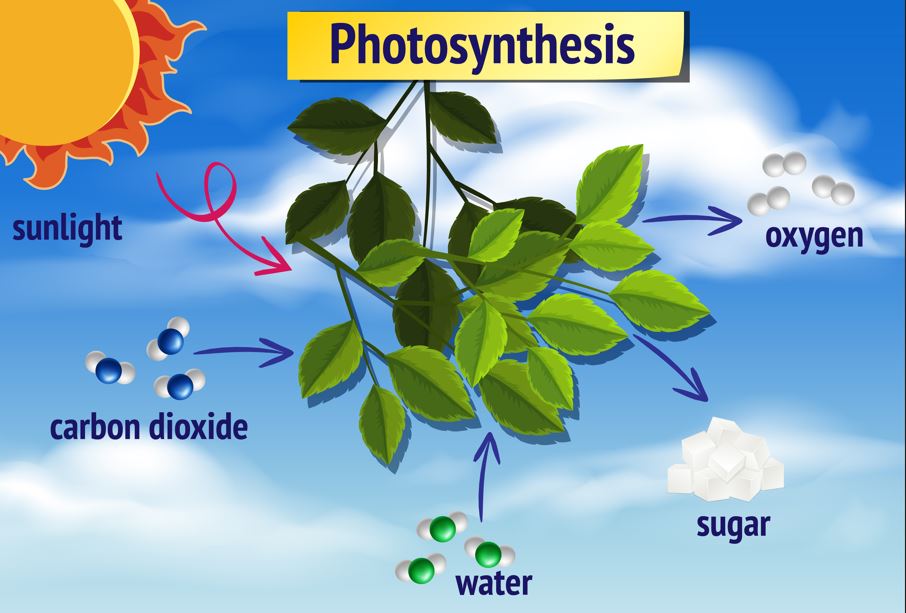
Figure 1: Cross-section of a leaf showing Chloroplasts (the site of photosynthesis).
Stomata: The Gaseous Gateways
Massive amounts of gaseous exchange take place in the leaves through tiny pores called stomata.
Opening and Closing: The opening and closing of the pore is a function of the guard cells. The guard cells swell when water flows into them, causing the stomatal pore to open. Conversely, the pore closes if the guard cells shrink. Plants close these pores when they don’t need CO₂ to conserve water.
2.2 Heterotrophic Nutrition
Heterotrophs depend on other organisms for food. This is divided into:
- Holozoic Nutrition: Organisms take in whole food and break it down inside the body (e.g., Humans, Amoeba, Lions).
- Saprophytic Nutrition: Organisms break down food material outside the body and then absorb it (e.g., Fungi like bread molds, yeast, mushrooms).
- Parasitic Nutrition: Organisms derive nutrition from plants or animals without killing them (e.g., Cuscuta, ticks, lice, leeches, tapeworms).
Nutrition in Amoeba (Single-celled Holozoic)
Amoeba uses temporary finger-like extensions (pseudopodia) to fuse over the food particle forming a food vacuole. Inside the vacuole, complex substances are broken down into simpler ones which diffuse into the cytoplasm. The remaining undigested material is moved to the surface and thrown out.
2.3 Nutrition in Human Beings (Digestion)
The human alimentary canal is a long tube extending from the mouth to the anus. We eat various types of food which has to pass through the same digestive tract. It acts as a processing machine to convert complex particles into smaller, water-soluble ones.
Step-by-Step Digestive Process:
- 1. The Mouth (Buccal Cavity):
- Teeth: Physically break down food (mastication).
- Tongue: Moves food and mixes it with saliva.
- Salivary Glands: Secrete saliva containing the enzyme Salivary Amylase. This breaks down starch (complex molecule) into sugar (simple molecule).
- 2. The Esophagus (Food Pipe):
The food is moved down by a rhythmic contraction and relaxation of the muscles called peristaltic movement. No digestion happens here.
- 3. The Stomach:
A J-shaped organ that expands when food enters. The muscular walls mix the food with digestive juices.
- Gastric Glands: Located in the stomach wall, they release three things:
- HCl (Hydrochloric Acid): Creates an acidic medium which facilitates the action of the enzyme pepsin. It also kills bacteria entering with food.
- Pepsin: A protein-digesting enzyme.
- Mucus: Protects the inner lining of the stomach from the action of the acid under normal conditions. (Lack of mucus can lead to ulcers).
- 4. The Small Intestine (The Site of Complete Digestion):
The longest part of the alimentary canal, fitted into a compact space via extensive coiling. Herbivores eating grass need a longer small intestine to allow cellulose to be digested. Carnivores like tigers have a shorter small intestine because meat is easier to digest.
It receives secretions from two glands:
- Liver: Secretes Bile Juice. Bile performs two functions:
- Makes the acidic food coming from the stomach alkaline so pancreatic enzymes can act.
- Emulsification: Breaks down large fat globules into smaller globules to increase enzyme efficiency.
- Pancreas: Secretes Pancreatic Juice containing:
- Trypsin: For digesting proteins.
- Lipase: For breaking down emulsified fats.
Final Digestion: The walls of the small intestine contain glands which secrete intestinal juice. This finally converts:
Proteins → Amino Acids
Carbohydrates → Glucose
Fats → Fatty Acids and GlycerolAbsorption via Villi: The inner lining of the small intestine has millions of tiny finger-like projections called Villi. They increase the surface area for absorption and are richly supplied with blood vessels to take the food to every cell.
- Liver: Secretes Bile Juice. Bile performs two functions:
- 5. The Large Intestine:
The unabsorbed food is sent here where more villi absorb water from this material. The rest of the material is removed from the body via the anus. The exit is regulated by the anal sphincter.
3. Respiration: The Energy Release Mechanisms ⚡
Many students confuse breathing with respiration. Breathing is the physical act of inhaling and exhaling. Respiration is the biochemical process where food (glucose) is broken down to release energy.
3.1 Breakdown of Glucose
The first step in all organisms is the breakdown of glucose (a 6-carbon molecule) into a 3-carbon molecule called Pyruvate. This takes place in the Cytoplasm. The fate of Pyruvate depends on the presence of Oxygen.
3.2 ATP: The Energy Currency
The energy released during cellular respiration is immediately used to synthesize a molecule called ATP (Adenosine Triphosphate) from ADP and inorganic phosphate.
ADP + P + Energy → ATP
When the cell needs energy, ATP is broken down (using water) to release a fixed amount of energy (30.5 kJ/mol), which drives the endothermic reactions in the cell.
3.3 Human Respiratory System
Nostrils: Air is taken in. Fine hairs and mucus filter out dust and impurities.
Trachea (Windpipe): Air passes through the throat. Rings of cartilage ensure the air passage does not collapse.
Lungs: Within the lungs, the passage divides into smaller and smaller tubes (bronchi and bronchioles) which finally terminate in balloon-like structures called Alveoli.
Mechanism of Breathing:
1. Inhalation: When we breathe in, our ribs lift, the diaphragm flattens, and the chest cavity becomes larger. Because of this, air is sucked into the lungs and fills the expanded alveoli.
2. Gas Exchange: The alveoli are covered with blood vessels. The oxygen in the alveolar air diffuses into the blood, and CO₂ from the blood diffuses into the alveoli.
3. Exhalation: The diaphragm relaxes and moves up, pushing air out.
Aquatic vs. Terrestrial: Aquatic animals (like fish) breathe faster than terrestrial animals. Why? Because the amount of dissolved oxygen in water is fairly low compared to the amount of oxygen in the air.
4. Transportation: The Internal Logistics 🚚
4.1 Transportation in Humans
The circulatory system transports food, oxygen, and waste. It consists of a pumping organ (Heart), fluid medium (Blood/Lymph), and tubes (Blood Vessels).
A. The Blood
- Plasma: The liquid component. It transports food, CO₂, and nitrogenous wastes in dissolved form.
- Red Blood Cells (RBC): Contain Hemoglobin, a red pigment that binds with oxygen and carries it to cells. (Note: CO₂ is more soluble in water than oxygen is, so it is mostly transported in dissolved form in plasma).
- Platelets: Maintenance cells that clot blood at the point of injury to prevent leakage.
- White Blood Cells (WBC): Provide immunity by fighting infections.
B. The Pumping Organ: Heart
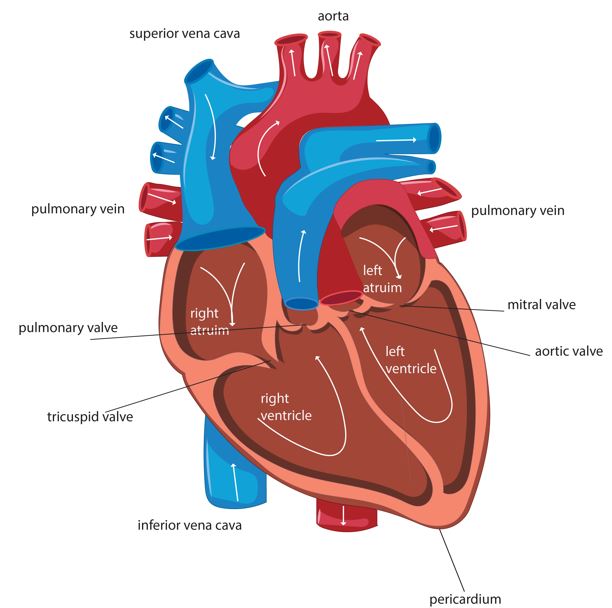
Figure 2: Schematic representation of transport and exchange of oxygen and carbon dioxide.
Our heart has four chambers to prevent the mixing of oxygen-rich and carbon-dioxide-rich blood.
- Left Atrium & Ventricle (Oxygenated Side): Oxygen-rich blood from the lungs comes to the thin-walled upper chamber, the Left Atrium. It relaxes to collect blood, then contracts, pushing blood to the Left Ventricle. The muscular Left Ventricle then contracts strongly to pump blood out to the Aorta (to the body).
- Right Atrium & Ventricle (Deoxygenated Side): Deoxygenated blood from the body enters the Right Atrium via the Vena Cava. It moves to the Right Ventricle, which pumps it to the lungs for oxygenation.
Double Circulation: In humans, blood goes through the heart twice during each cycle (Lungs → Heart → Body → Heart → Lungs). This separates oxygenated and deoxygenated blood, allowing a highly efficient supply of oxygen needed for maintaining body temperature.
C. Blood Vessels
- Arteries: Carry blood away from the heart at high pressure. They have thick, elastic walls.
- Veins: Carry blood back to the heart. The pressure is low, so they have thin walls. Crucially, they have valves to ensure blood flows only in one direction.
- Capillaries: The smallest vessels (one cell thick) where exchange of material happens between blood and surrounding cells.
D. Lymph (Tissue Fluid)
Another type of fluid involved in transportation. Some plasma, proteins, and blood cells escape from capillaries into intercellular spaces to form lymph. It drains excess fluid from extracellular space back into the blood and carries digested fat from the intestine.
4.2 Transportation in Plants
Plants do not move, and plant bodies have a large proportion of dead cells in many tissues. As a result, plants have low energy needs and can use relatively slow transport systems.
1. Transport of Water (Xylem)
Xylem tissue consists of vessels and tracheids.
Mechanism:
Root Pressure: Roots take up ions from the soil, creating a difference in concentration. Water moves into the root to eliminate this difference. This pushes water up steadily.
Transpiration Pull: The evaporation of water molecules from the cells of a leaf creates a suction (like sucking a straw) which pulls water from the xylem cells of roots. This is the major force during the day.
2. Transport of Food (Phloem)
The transport of soluble products of photosynthesis is called Translocation. Unlike xylem (physical forces), phloem uses energy.
Sucrose is transferred into phloem tissue using energy from ATP. This increases the osmotic pressure of the tissue causing water to move into it. This pressure moves the material in the phloem to tissues which have less pressure (e.g., from leaves to roots or fruits).
5. Excretion: The Waste Management System 🗑️
Metabolic activities generate nitrogenous materials which need to be removed. The biological process involved in the removal of these harmful metabolic wastes is called excretion.
5.1 Excretion in Human Beings
The excretory system consists of:
- A pair of Kidneys (located in the abdomen, on either side of the backbone).
- A pair of Ureters (tubes connecting kidneys to bladder).
- A Urinary Bladder (stores urine).
- A Urethra (passage for urine exit).
Structure of the Nephron
The kidney is made of filtration units called Nephrons.
Mechanism of Urine Formation:
- Filtration: Nitrogenous wastes such as urea or uric acid are removed from blood in the kidney. The Glomerulus (a cluster of capillaries) filters the blood into the Bowman’s capsule.
- Selective Reabsorption: The initial filtrate contains glucose, amino acids, salts, and a major amount of water. As the urine flows along the tube, these useful substances are selectively reabsorbed back into the blood capillaries surrounding the tubule. The amount of water reabsorbed depends on how much excess water is in the body.
- Secretion: The tubule cells secrete substances like hydrogen ions and potassium ions into the filtrate to maintain ionic balance.
- Excretion: The urine formed enters the ureter and is stored in the bladder until the pressure of the expanded bladder leads to the urge to pass it out.
Artificial Kidney (Hemodialysis):
In case of kidney failure, waste accumulates in the blood (toxic). An artificial kidney is a device to remove nitrogenous waste products from the blood through dialysis. It contains a number of tubes with a semi-permeable lining suspended in a tank filled with dialyzing fluid. The patient’s blood is passed through these tubes. Wastes diffuse into the fluid, and purified blood is pumped back.
5.2 Excretion in Plants
Plants use completely different strategies for excretion than animals:
- Oxygen: It can be thought of as a waste product generated during photosynthesis!
- Water: Excess water is removed by transpiration.
- Dead Tissues: Waste products may be stored in leaves that fall off.
- Vacuoles: Waste products are stored in cellular vacuoles.
- Resins and Gums: Stored in old xylem.
- Soil: Plants excrete some waste substances into the soil around them.
6. Comprehensive Question Bank
Test your understanding with these detailed questions.
Multiple Choice Questions (MCQ)
- A person climbing a high mountain may experience faster breathing. This is a response to:
(a) Lower temperatures. (b) Lower concentration of oxygen in the air. (c) Increased atmospheric pressure. (d) The need to release more CO₂. - If the pancreas is not functioning correctly, which food components will be most difficult to digest?
(a) Starch and sugars (b) Proteins and fats (c) Water and minerals (d) Cellulose - Which of the following describes the path of water through a plant?
(a) Phloem → Leaf cells → Stomata (b) Root hairs → Xylem → Leaf cells → Stomata (c) Stomata → Xylem → Root hairs (d) Root hairs → Phloem → Xylem - In the human kidney, glucose is filtered but does not appear in urine. Why?
(a) It is never filtered. (b) It is stored in the bladder. (c) It is fully reabsorbed back into the blood. (d) It is converted to urea. - The correct sequence of anaerobic reactions in yeast is:
(a) Glucose → Cytoplasm → Pyruvate → Mitochondria → Ethanol + CO₂
(b) Glucose → Cytoplasm → Pyruvate → Cytoplasm → Lactic acid
(c) Glucose → Cytoplasm → Pyruvate → Mitochondria → Lactic acid
(d) Glucose → Cytoplasm → Pyruvate → Cytoplasm → Ethanol + CO₂
MCQ Answers & Explanations:
- 1. (b) At high altitudes, air is thinner (less O₂). The body breathes faster to compensate.
- 2. (b) Pancreas releases Trypsin (for protein) and Lipase (for fats). Without it, these digest poorly.
- 3. (b) Water enters via roots, travels up the xylem, reaches leaves, and exits via stomata (transpiration).
- 4. (c) Glucose is a vital nutrient. While small enough to be filtered, the nephron tubules actively pump it back into the blood.
- 5. (d) Anaerobic respiration happens entirely in the cytoplasm (not mitochondria) and yeast produces Ethanol.
Short Answer Questions (Reasoning Based)
- Q: Why do herbivores have longer small intestines than carnivores?
A: Herbivores eat grass which is full of cellulose. Cellulose is a complex carbohydrate that takes a long time to digest and requires the action of bacteria. A longer intestine allows more time for this digestion. Carnivores eat meat, which is easier to digest, hence they have shorter intestines. - Q: Why is the rate of breathing in aquatic organisms much faster than in terrestrial organisms?
A: Aquatic animals utilize oxygen dissolved in water. Since the amount of dissolved oxygen is fairly low compared to the amount of oxygen in the air, they have to breathe faster to get the required amount of oxygen. - Q: What is the function of the cartilaginous rings in the trachea?
A: The C-shaped rings of cartilage provide structural support to the trachea. They prevent the windpipe from collapsing inward when the air pressure inside drops during inhalation.
Long Answer Questions (Detailed Analysis)
- Q: Differentiate between Arteries and Veins.
A:Feature Arteries Veins Direction Carry blood away from the heart. Carry blood towards the heart. Oxygenation Carry oxygenated blood (except Pulmonary Artery). Carry deoxygenated blood (except Pulmonary Vein). Walls Thick and elastic (to withstand high pressure). Thin and less elastic. Valves Valves are absent. Valves are present to prevent backflow. Location Deep-seated under the skin. Superficial (visible under skin). - Q: Describe the process of Double Circulation in human beings. Why is it necessary?
A: Double circulation means blood passes through the heart twice in one complete cycle of the body. It involves two pathways:
1. Pulmonary Circulation: Deoxygenated blood moves from the Right Ventricle to the Lungs (via Pulmonary Artery), gets oxygenated, and returns to the Left Atrium (via Pulmonary Veins).
2. Systemic Circulation: Oxygenated blood moves from the Left Ventricle to the body tissues (via Aorta), gives up oxygen, collects CO₂, and returns to the Right Atrium (via Vena Cava).
Necessity: This separation ensures a highly efficient supply of oxygen to the body. This is crucial for warm-blooded animals like humans and birds who constantly need energy to maintain their body temperature.
Read Also:
Class 10 Chapter 4- Carbon and its Compounds
For more check official website of
NCERT